QUESTION IMAGE
Question
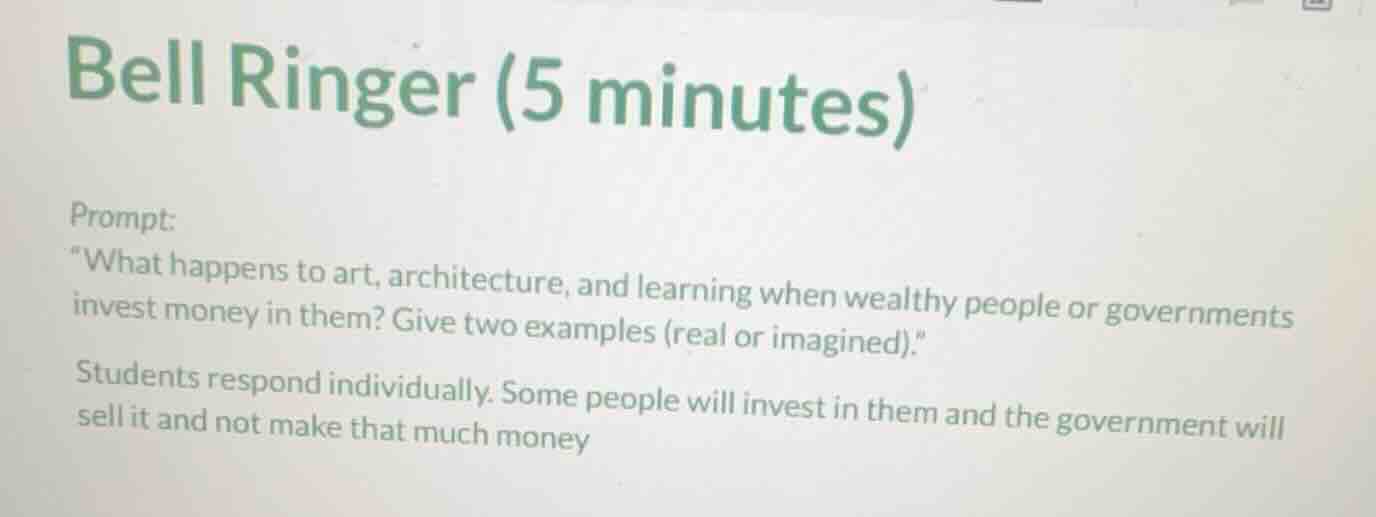
bell ringer (5 minutes)
prompt:
\what happens to art, architecture, and learning when wealthy people or governments invest money in them? give two examples (real or imagined).\
students respond individually. some people will invest in them and the government will sell it and not make that much money
When wealthy individuals or governments invest in art, architecture, and learning, these areas typically see growth, increased accessibility, and preservation, though there can be risks of commercialization or misaligned priorities.
- Real Example: The Medici Family (Renaissance Italy)
The wealthy Medici banking family funded countless artists (like Michelangelo and da Vinci), architects (who designed Florence's Duomo and Palazzo Medici), and scholars. This investment sparked the Italian Renaissance, elevating artistic and academic innovation globally, making these works accessible to the public and preserving them for future generations.
- Imagined Example: City Government Arts Initiative
A city government invests in free public art installations, renovates historic libraries, and funds free university-level continuing education courses. Local artists gain stable income, public spaces become more culturally vibrant, and residents gain greater access to learning, boosting community engagement and cultural literacy. A potential downside could be if the government prioritizes tourist-focused art over local, marginalized cultural expressions to drive revenue.

Snap & solve any problem in the app
Get step-by-step solutions on Sovi AI
Photo-based solutions with guided steps
Explore more problems and detailed explanations
When wealthy people or governments invest in art, architecture, and learning, these fields typically experience growth, increased accessibility, cultural preservation, and innovation, though there can be risks of commercialization or misaligned priorities.
- Real example: The Medici Family of Renaissance Italy funded artists, architects, and scholars, catalyzing the Italian Renaissance and creating enduring, globally influential art, architecture, and academic advancements.
- Imagined example: A city government invests in free public art, renovated community libraries, and free adult education courses, which enriches local cultural life, expands access to learning, and supports local creators, though it could overprioritize tourist-focused projects over local community needs.