QUESTION IMAGE
Question
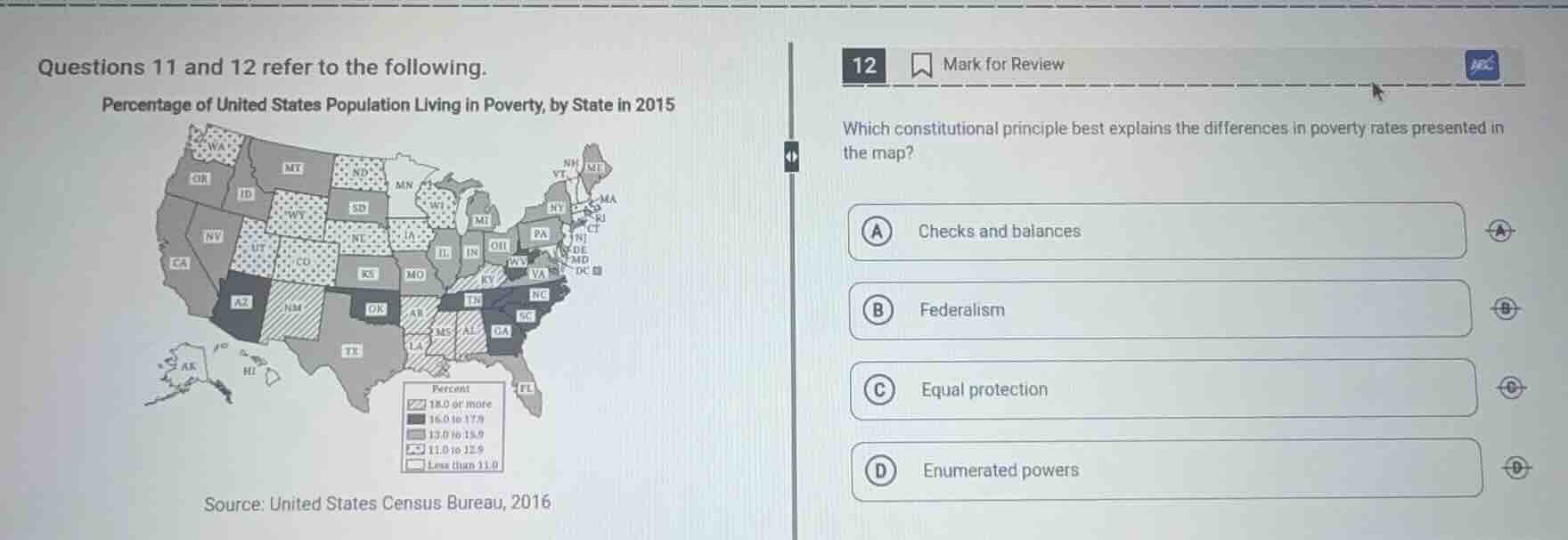
questions 11 and 12 refer to the following.
percentage of united states population living in poverty, by state in 2015
source: united states census bureau, 2016
12 mark for review
which constitutional principle best explains the differences in poverty rates presented in
the map?
a checks and balances
b federalism
c equal protection
d enumerated powers
The map shows varying state poverty rates in the U.S. Federalism is the constitutional principle that divides power between the federal government and state governments, allowing states to implement different policies related to social services, economic development, and poverty alleviation. These differing state-level policies lead to variations in poverty rates across states. Checks and balances refers to the separation of power between government branches, equal protection is a legal guarantee of equal treatment under the law, and enumerated powers are specific federal government powers—none of these directly explain state-by-state poverty rate differences.

Snap & solve any problem in the app
Get step-by-step solutions on Sovi AI
Photo-based solutions with guided steps
Explore more problems and detailed explanations
B. Federalism