QUESTION IMAGE
Question
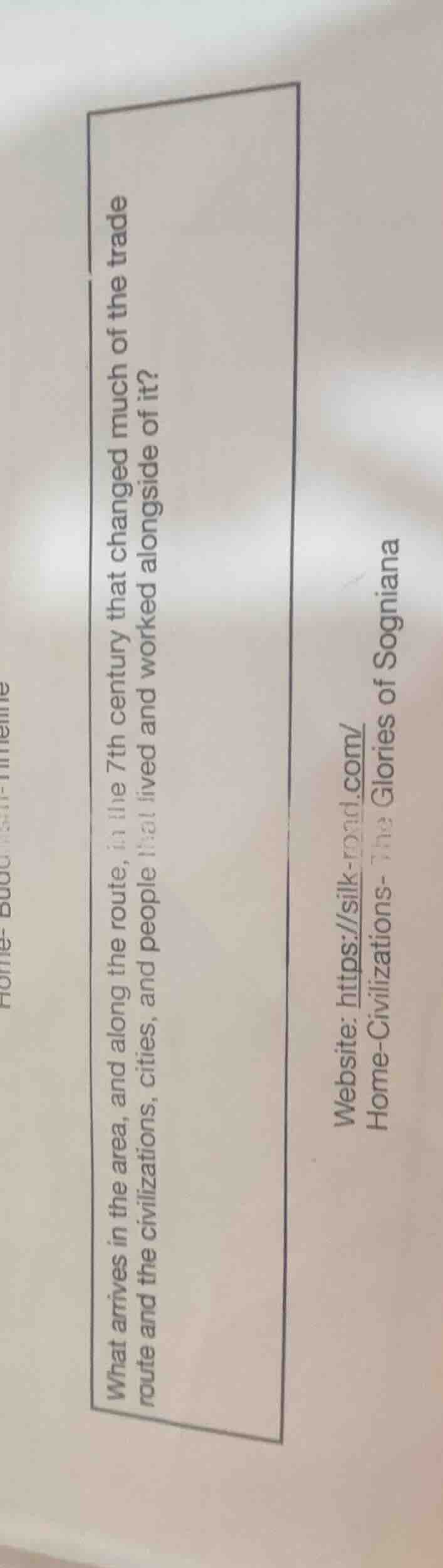
what arrives in the area, and along the route, in the 7th century that changed much of the trade route and the civilizations, cities, and people that lived and worked alongside of it?
website: https://silk-road.com/
home-civilizations- the glories of sogniana
The question is about the 7th - century trade route (likely the Silk Road), its impact on civilizations, cities, and people. To answer, we can refer to historical knowledge about the Silk Road in the 7th century. Goods like silk, spices, precious metals, and textiles were traded. Ideas (religions like Buddhism, Islam, Christianity spread), technologies (papermaking, agricultural techniques), and cultural practices also spread. Civilizations like Tang China, Sogdian city - states, Byzantine Empire, and Indian kingdoms were involved. Cities like Chang'an, Samarkand, and Constantinople thrived as trade hubs. People such as merchants (Sogdians, Arabs, Chinese), artisans, and religious missionaries worked along the route. The trade route led to economic prosperity, cultural exchange, and political interactions among these entities.

Snap & solve any problem in the app
Get step-by-step solutions on Sovi AI
Photo-based solutions with guided steps
Explore more problems and detailed explanations
In the 7th - century (likely referring to the Silk Road):
- Traded Goods: Silk (from China), spices (from South Asia), precious metals (like gold and silver), textiles, ceramics, and horses (from Central Asia) were major trade items.
- Changed Trade Volume/Patterns: The Tang Dynasty's stability in China and the rise of Sogdian merchant networks increased trade volume. Trade became more organized with established caravan routes and trading posts.
- Civilizations Involved: Tang China (prospered from trade, had a cosmopolitan capital Chang'an), Sogdian city - states (acted as middlemen, controlled key trade nodes), Byzantine Empire (traded for silk and spices), and Indian kingdoms (traded spices and religious ideas).
- Cities Impacted: Chang'an (China) became a global trade and cultural hub with foreign merchants and religions. Samarkand (Central Asia) thrived as a Sogdian - controlled trade center. Constantinople (Byzantine) was a key western terminus for silk trade.
- People's Roles: Sogdian merchants dominated long - distance trade, Arab traders expanded into the region, Chinese artisans and officials managed domestic trade and infrastructure, and religious missionaries (Buddhist, Christian, and later Islamic) spread their faiths along the route.