25 multiple choice 1 point\nwhich of the following is true about a lease agreement?\na lease is an agreement…
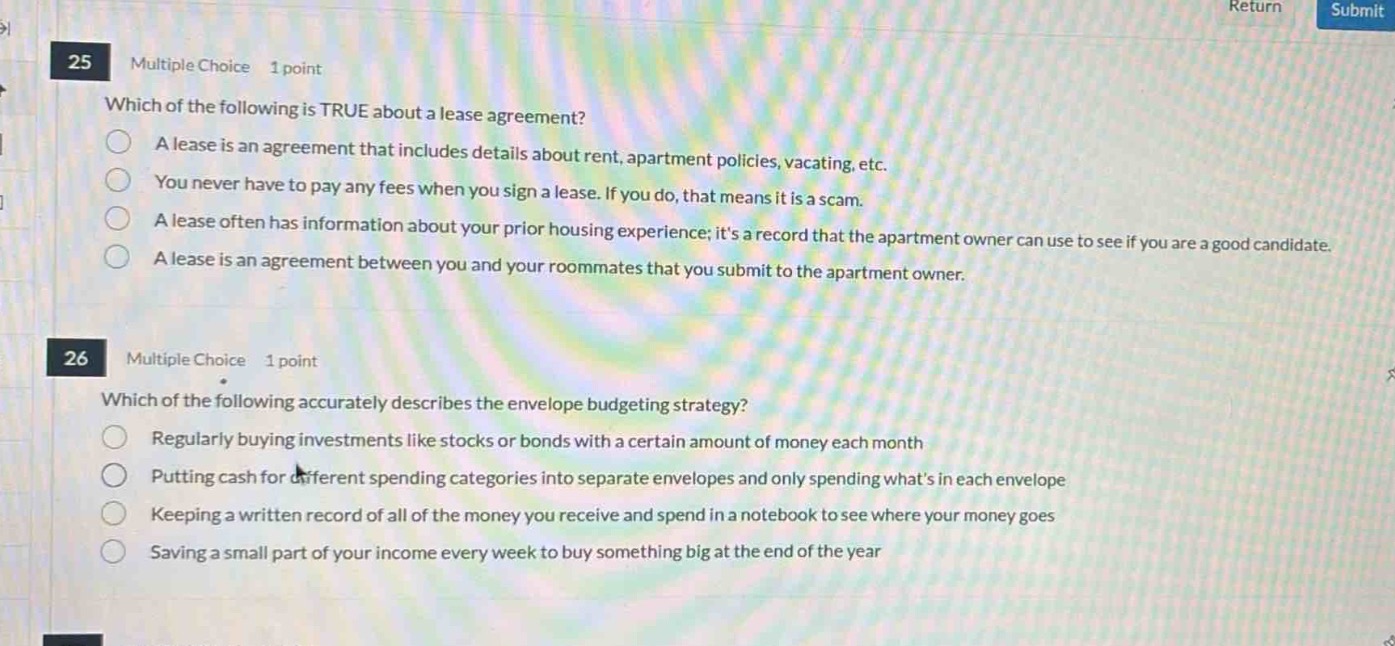
25 multiple choice 1 point\nwhich of the following is true about a lease agreement?\na lease is an agreement that includes details about rent, apartment policies, vacating, etc.\nyou never have to pay any fees when you sign a lease. if you do, that means it is a scam.\na lease often has information about your prior housing experience; its a record that the apartment owner can use to see if you are a good candidate.\na lease is an agreement between you and your roommates that you submit to the apartment owner.\n26 multiple choice 1 point\nwhich of the following accurately describes the envelope budgeting strategy?\nregularly buying investments like stocks or bonds with a certain amount of money each month\nputting cash for different spending categories into separate envelopes and only spending whats in each envelope\nkeeping a written record of all of the money you receive and spend in a notebook to see where your money goes\nsaving a small part of your income every week to buy something big at the end of the year
Answer
Brief Explanations:
For question 25, a lease agreement typically contains details about rent, apartment - related policies, and vacating procedures. It is a legal contract between a tenant and a landlord. Option B is incorrect as signing a lease may involve fees like security deposits. Option C is wrong because a lease doesn't usually have information about prior housing experience for that purpose. Option D is incorrect as a lease is between the tenant and the landlord, not among room - mates. For question 26, the envelope budgeting strategy involves allocating cash for different spending categories into separate envelopes and only spending the amount in each envelope. Option A describes investment, option C is a general record - keeping method, and option D is a savings strategy for a large purchase.
Answer:
- A. A lease is an agreement that includes details about rent, apartment policies, vacating, etc.
- B. Putting cash for different spending categories into separate envelopes and only spending what's in each envelope