a company purchased $1,800 of merchandise on july 5 with terms 2/10, n/30. on july 7, it returned $200 worth…
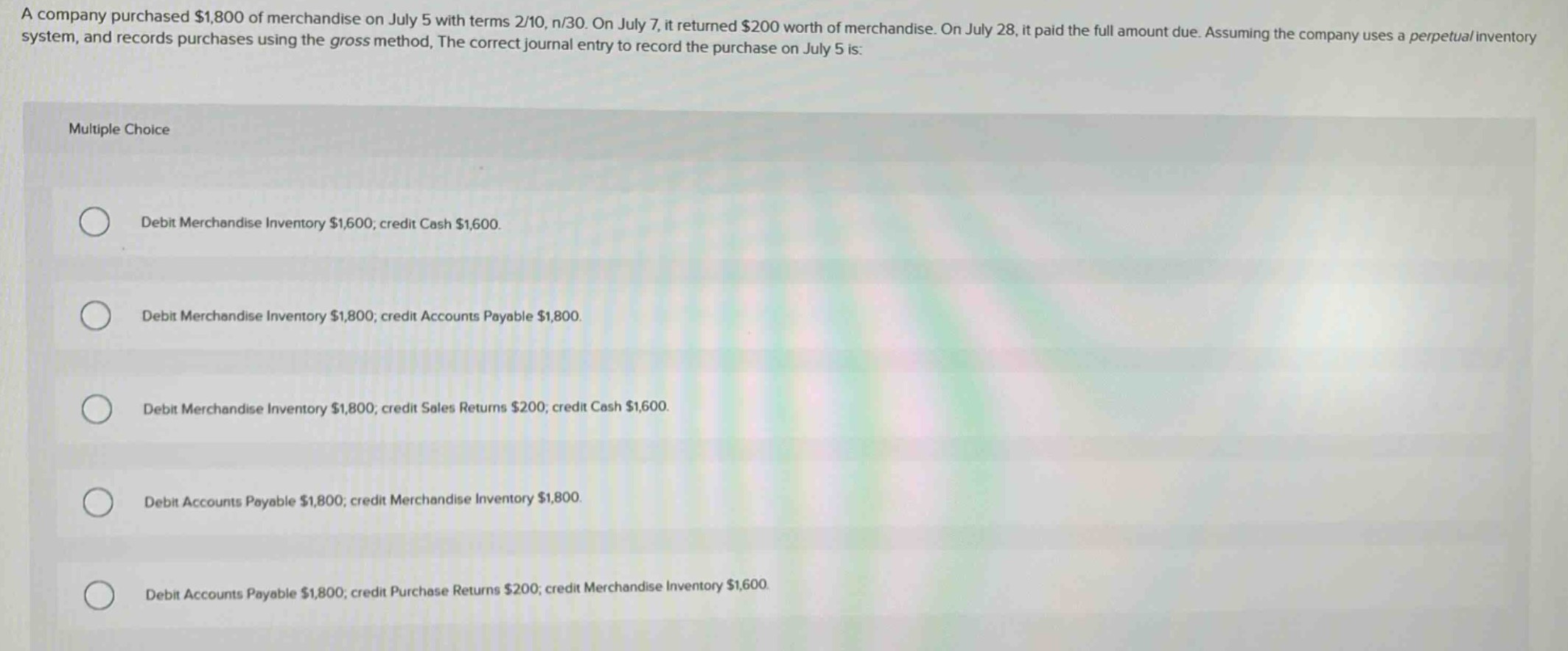
a company purchased $1,800 of merchandise on july 5 with terms 2/10, n/30. on july 7, it returned $200 worth of merchandise. on july 28, it paid the full amount due. assuming the company uses a perpetual inventory system, and records purchases using the gross method, the correct journal entry to record the purchase on july 5 is: multiple choice debit merchandise inventory $1,600; credit cash $1,600. debit merchandise inventory $1,800; credit accounts payable $1,800. debit merchandise inventory $1,800; credit sales returns $200; credit cash $1,600. debit accounts payable $1,800; credit merchandise inventory $1,800. debit accounts payable $1,800; credit purchase returns $200; credit merchandise inventory $1,600.
Answer
Brief Explanations:
Under the perpetual - inventory system and the gross method, when merchandise is purchased on account, the Merchandise Inventory account is debited to increase the inventory balance, and the Accounts Payable account is credited to record the liability. The amount of the purchase is the full invoice amount before any returns or discounts. Here, the purchase amount is $1,800.
Answer:
Debit Merchandise Inventory $1,800; credit Accounts Payable $1,800.