at the end of the fiscal year, the usual adjustment for depreciation on equipment was omitted. which of the…
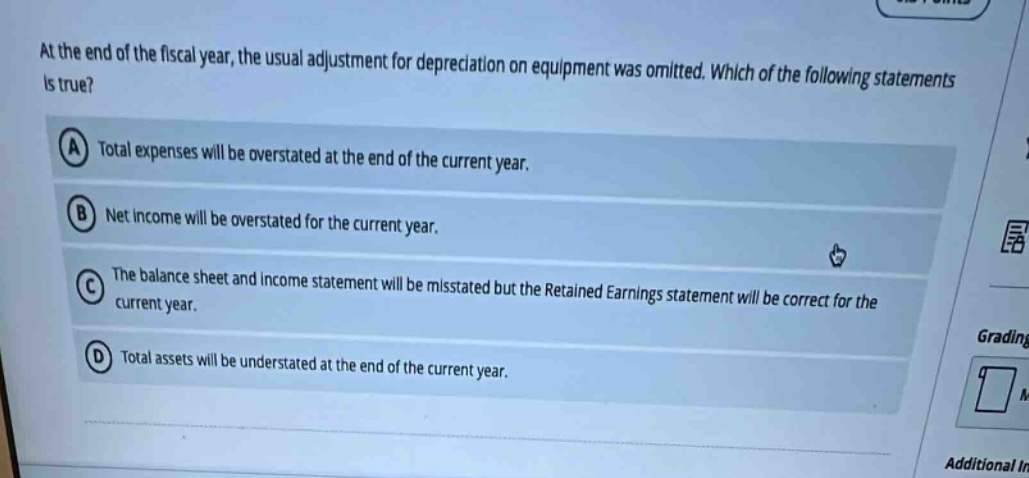
at the end of the fiscal year, the usual adjustment for depreciation on equipment was omitted. which of the following statements is true? a total expenses will be overstated at the end of the current year. b net income will be overstated for the current year. c the balance sheet and income statement will be misstated but the retained earnings statement will be correct for the current year. d total assets will be understated at the end of the current year.
Answer
Brief Explanations:
Depreciation is an expense. Omitting the depreciation adjustment means expenses are under - stated. Since Net Income = Revenue - Expenses, under - stating expenses overstates net income. Total assets are also overstated as the accumulated depreciation (a contra - asset) is not recorded. The balance sheet and income statement are misstated, and the retained earnings statement is also misstated because net income affects retained earnings.
Answer:
B. Net income will be overstated for the current year.