2. fill in the blank - generally, large businesses employ over ____ employees and/or have an annual revenue…
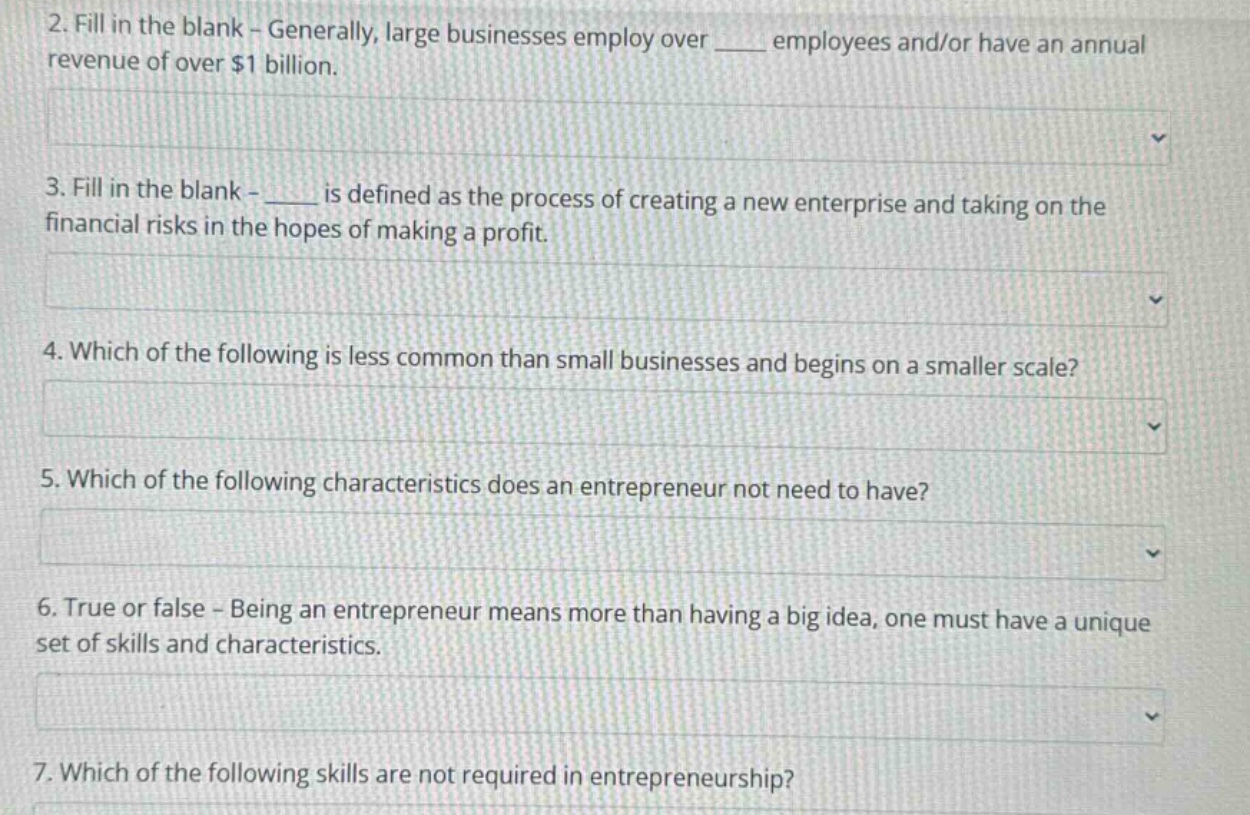
2. fill in the blank - generally, large businesses employ over ____ employees and/or have an annual revenue of over $1 billion.\n3. fill in the blank - ____ is defined as the process of creating a new enterprise and taking on the financial risks in the hopes of making a profit.\n4. which of the following is less common than small businesses and begins on a smaller scale?\n5. which of the following characteristics does an entrepreneur not need to have?\n6. true or false - being an entrepreneur means more than having a big idea, one must have a unique set of skills and characteristics.\n7. which of the following skills are not required in entrepreneurship?
Answer
Brief Explanations:
- Generally, large - scale businesses are often considered to employ over 500 employees and/or have an annual revenue of over $1 billion.
- Entrepreneurship is the process of creating a new enterprise and taking on financial risks for profit.
- Micro - businesses are less common than small businesses and start on a smaller scale.
- Without options, it's hard to say, but some non - essential characteristics for an entrepreneur could be a large pre - existing fortune (as they can raise capital in other ways).
- Being an entrepreneur requires more than just a big idea; skills like leadership, risk - taking, and problem - solving are crucial. So it's true.
- Without options, it's hard to answer, but some skills not strictly required could be very specialized technical skills in a non - related field (if they can hire for that).
Answer:
- 500
- Entrepreneurship
- Micro - businesses
- No options provided
- True
- No options provided