1. what is the first step you should take when a conflict arises in a professional setting?\n2. describe one…
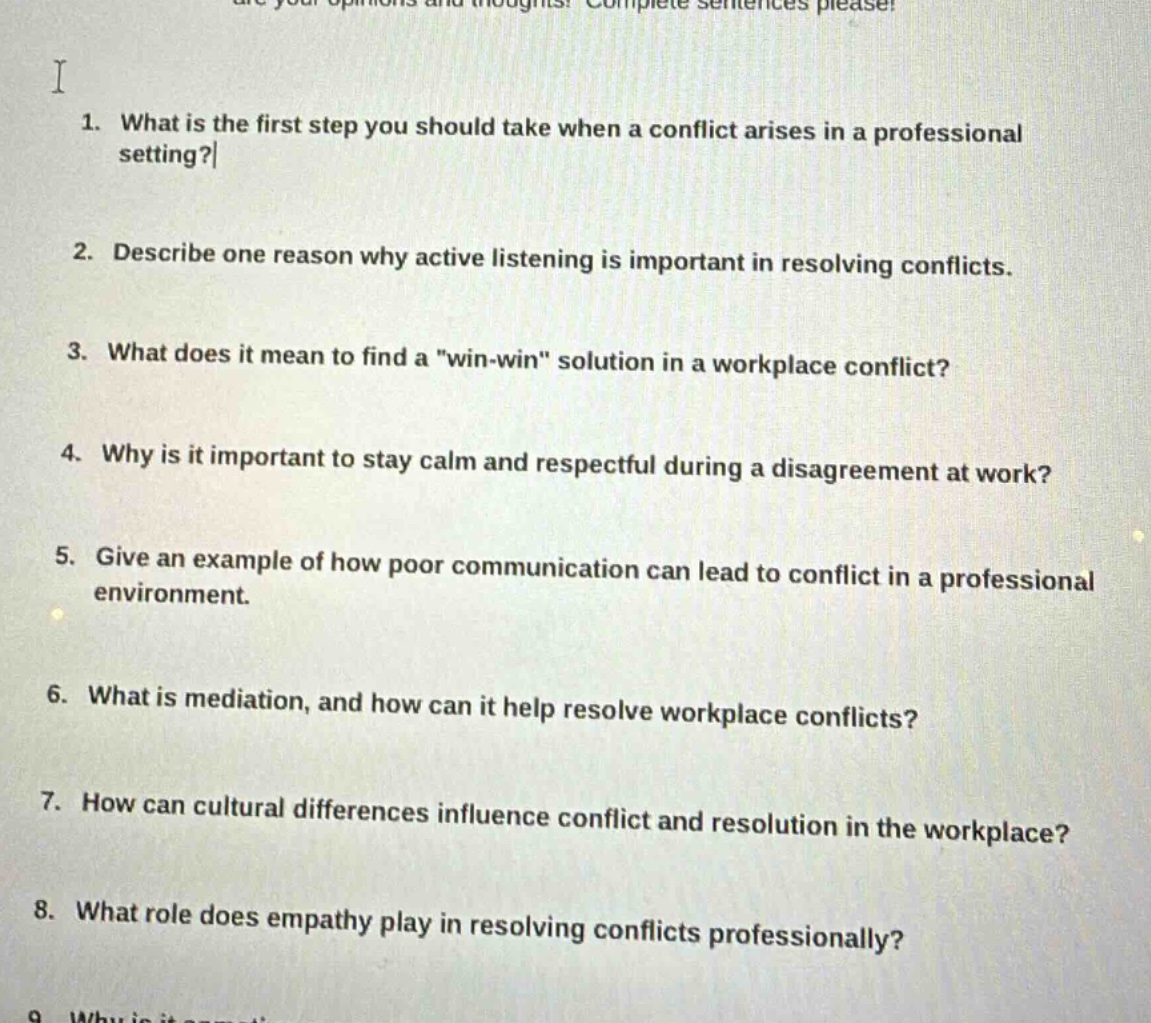
1. what is the first step you should take when a conflict arises in a professional setting?\n2. describe one reason why active listening is important in resolving conflicts.\n3. what does it mean to find a \win - win\ solution in a workplace conflict?\n4. why is it important to stay calm and respectful during a disagreement at work?\n5. give an example of how poor communication can lead to conflict in a professional environment.\n6. what is mediation, and how can it help resolve workplace conflicts?\n7. how can cultural differences influence conflict and resolution in the workplace?\n8. what role does empathy play in resolving conflicts professionally?
Answer
Brief Explanations:
- The first step is usually to acknowledge the conflict and create a safe - space for discussion. This helps in de - escalating initial tensions.
- Active listening is important as it shows respect and helps in understanding the other party's perspective, which is crucial for finding a solution.
- A "win - win" solution means both parties in a workplace conflict get something they want or need, and neither feels like a loser. It promotes long - term positive relationships.
- Staying calm and respectful during a disagreement at work helps in maintaining a professional atmosphere, and also makes it easier to have a rational discussion and find a solution.
- For example, if a manager gives unclear instructions to an employee about a task, the employee may misunderstand and do it wrong. This can lead to frustration and conflict between them.
- Mediation is when a neutral third - party helps the conflicting parties communicate and find a mutually acceptable solution. It can help by providing an unbiased perspective and facilitating communication.
- Cultural differences can influence conflict as different cultures may have different communication styles, values, and norms. In resolution, understanding these differences can help in finding a solution that respects all parties' cultural backgrounds.
- Empathy allows a person to understand and share the feelings of the other party in a conflict. It helps in building rapport and finding solutions that take into account everyone's emotions.
Answer:
- Acknowledge the conflict and create a safe - space for discussion.
- It shows respect and helps understand the other party's perspective.
- Both parties get something they want or need and neither feels like a loser.
- It maintains a professional atmosphere and enables rational discussion.
- Unclear instructions from a manager leading to employee's wrong task execution and frustration.
- A neutral third - party helps in communication and finding a mutually acceptable solution; provides an unbiased perspective and facilitates communication.
- Different cultures have different styles, values, and norms; understanding helps in respectful solutions.
- It helps in building rapport and considering everyone's emotions.