the following information relates to inventory for shoeless joe incorporated.\ndate\ttransaction\tquantity\tp…
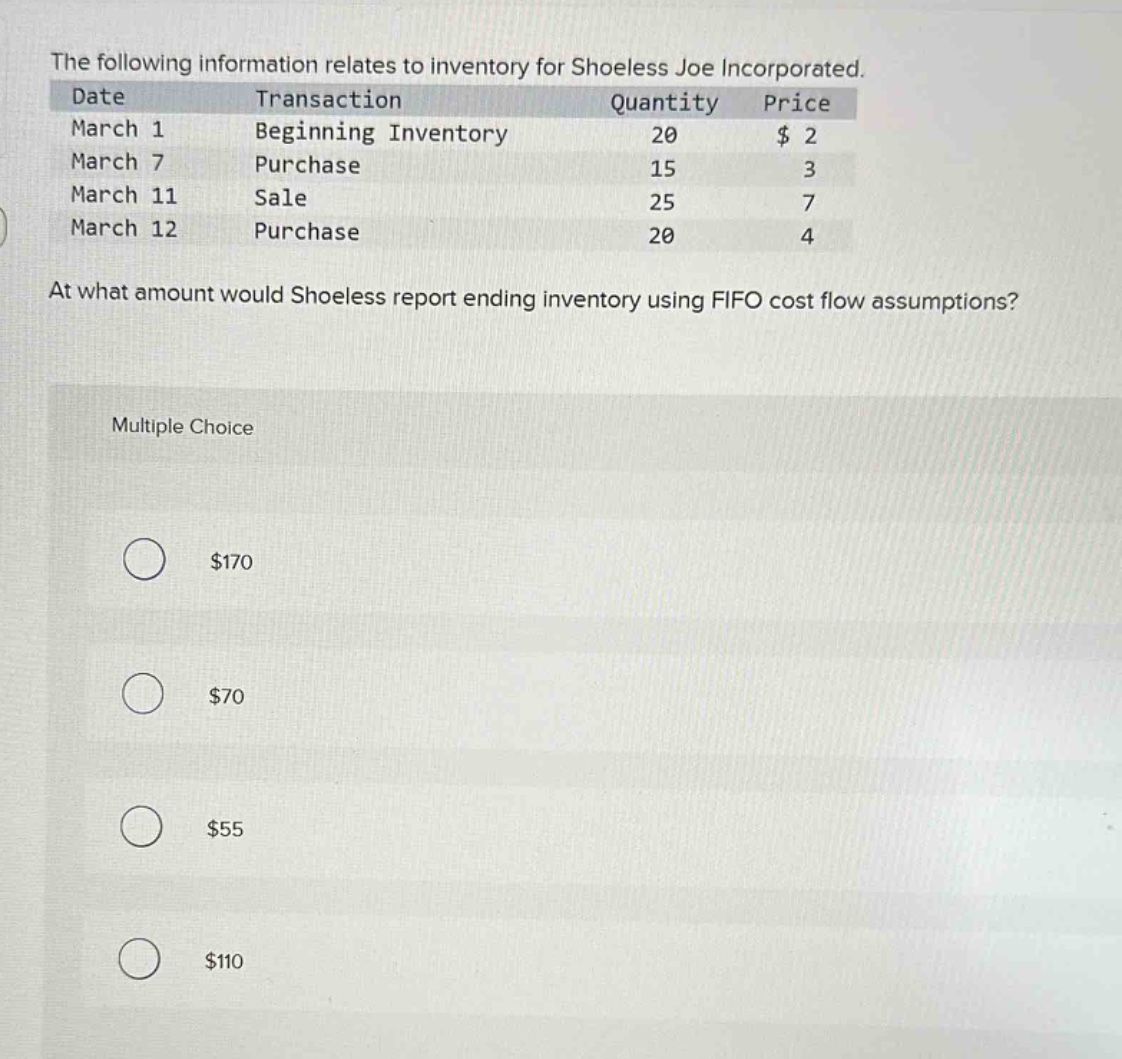
the following information relates to inventory for shoeless joe incorporated.\ndate\ttransaction\tquantity\tprice\nmarch 1\tbeginning inventory\t20\t$ 2\nmarch 7\tpurchase\t15\t3\nmarch 11\tsale\t25\t7\nmarch 12\tpurchase\t20\t4\nat what amount would shoeless report ending inventory using fifo cost flow assumptions?\nmultiple choice\n$170\n$70\n$55\n$110
Answer
Explanation:
Step1: Calculate units available for sale
Beginning inventory 20 units + Purchase on March 7 15 units+ Purchase on March 12 20 units = 20 + 15+20 = 55 units
Step2: Calculate units sold
25 units were sold on March 11.
Step3: Calculate ending - inventory units
Ending - inventory units=Units available for sale - Units sold = 55 - 25=30 units
Step4: Allocate costs using FIFO
Under FIFO, the last - purchased units are in ending inventory. So, 20 units from the March 12 purchase (cost $4 per unit) and 10 units from the March 7 purchase (cost $3 per unit). Cost of ending inventory=(20×4)+(10×3)=80 + 30=$110
Answer:
$110