identify the examples of good internal control designed to protect over - the - counter cash receipts. the…
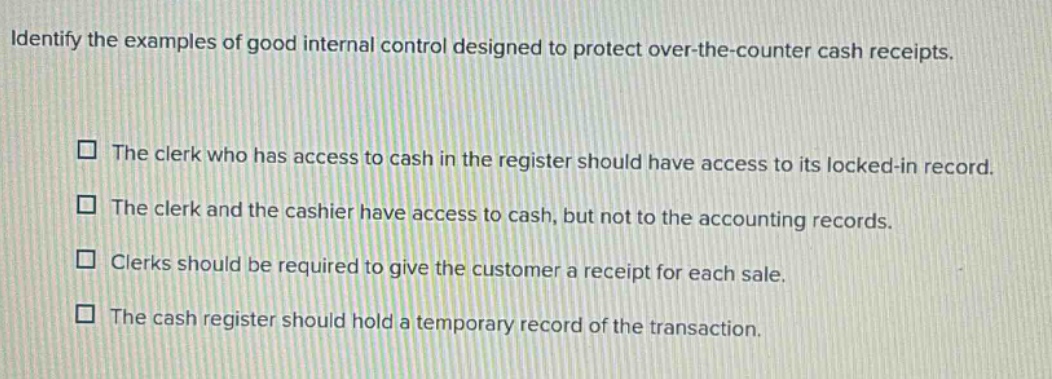
identify the examples of good internal control designed to protect over - the - counter cash receipts. the clerk who has access to cash in the register should have access to its locked - in record. the clerk and the cashier have access to cash, but not to the accounting records. clerks should be required to give the customer a receipt for each sale. the cash register should hold a temporary record of the transaction.
Answer
Brief Explanations:
- Separation of duties is key in internal control. The clerk and cashier having access to cash but not accounting records (to prevent fraud by manipulating records) is a good control.
- Requiring clerks to give customers a receipt for each sale provides a record - trail and helps in accountability.
- A cash register holding a temporary record of the transaction is also a good way to keep track of cash receipts. However, the clerk having access to both cash and its locked - in record is a bad practice as it can lead to fraud.
Answer:
- The clerk and the cashier have access to cash, but not to the accounting records.
- Clerks should be required to give the customer a receipt for each sale.
- The cash register should hold a temporary record of the transaction.