identify the examples of good internal controls designed to protect cash received in the mail. the…
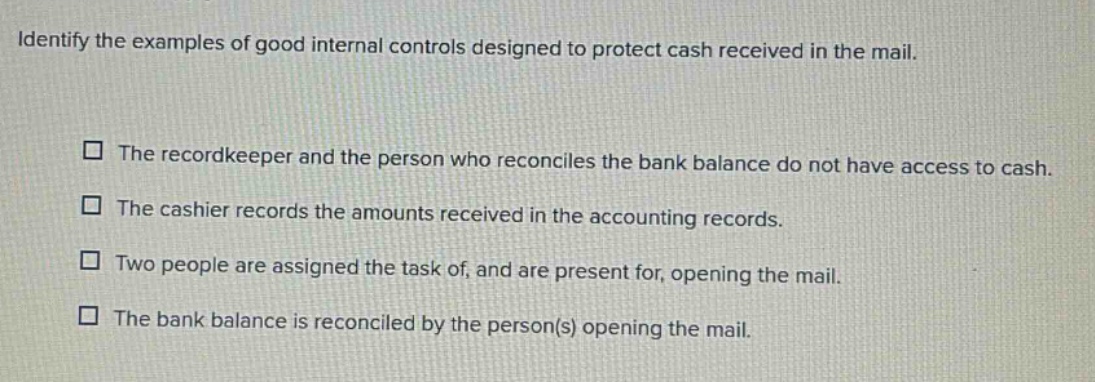
identify the examples of good internal controls designed to protect cash received in the mail. the recordkeeper and the person who reconciles the bank balance do not have access to cash. the cashier records the amounts received in the accounting records. two people are assigned the task of, and are present for, opening the mail. the bank balance is reconciled by the person(s) opening the mail.
Answer
Brief Explanations:
- Separation of duties is a key internal - control principle. When the record - keeper and bank - balance reconciler don't have access to cash, it prevents fraud as one person can't manipulate records and steal cash simultaneously.
- Having two people open the mail provides a system of checks and balances, reducing the risk of cash being misappropriated during the mail - opening process.
- The cashier recording amounts received in accounting records is not a good internal control as it combines custody (cash) and recording functions, increasing fraud risk.
- Having the person opening the mail reconcile the bank balance combines incompatible functions, increasing the risk of undetected fraud.
Answer:
The recordkeeper and the person who reconciles the bank balance do not have access to cash., Two people are assigned the task of, and are present for, opening the mail.