look at the table below showing an example of a checkbook ledger. malcolm has several receipts from recent…
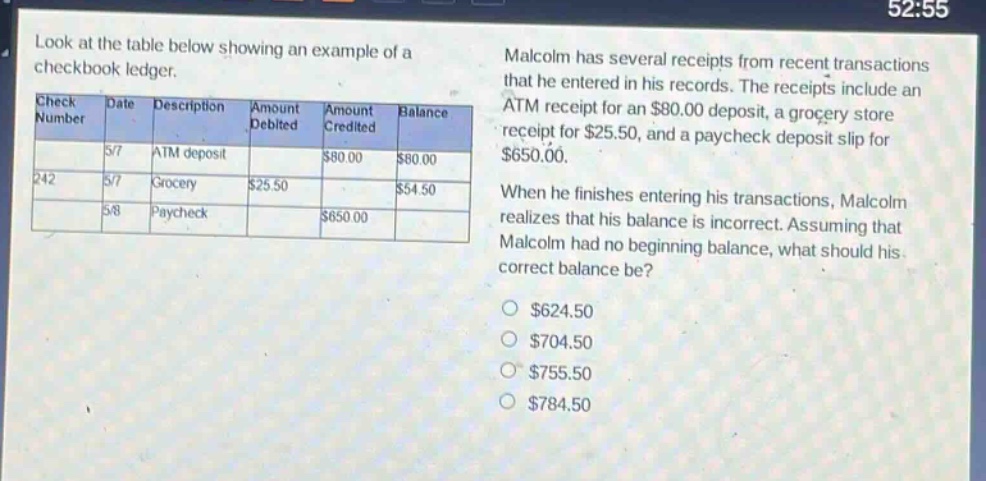
look at the table below showing an example of a checkbook ledger. malcolm has several receipts from recent transactions that he entered in his records. the receipts include an atm receipt for an $80.00 deposit, a grocery store receipt for $25.50, and a paycheck deposit slip for $650.00. when he finishes entering his transactions, malcolm realizes that his balance is incorrect. assuming that malcolm had no beginning balance, what should his correct balance be? check number date description amount debited amount credited balance 57 atm deposit $80.00 $80.00 242 5/7 grocery $25.50 $54.50 58 paycheck $650.00 $624.50 $704.50 $755.50 $784.50
Answer
Explanation:
Step1: Identify income amounts
Deposits are income. ATM deposit = $80, paycheck deposit = $650.
Step2: Identify expense amount
Grocery store expense = $25.50.
Step3: Calculate correct balance
Balance = 80 + 650 - 25.50 = 704.50.
Answer:
$704.50