multiple select question\nselect all that apply\non july 2, pinto inc. sells merchandise for $1100 on…
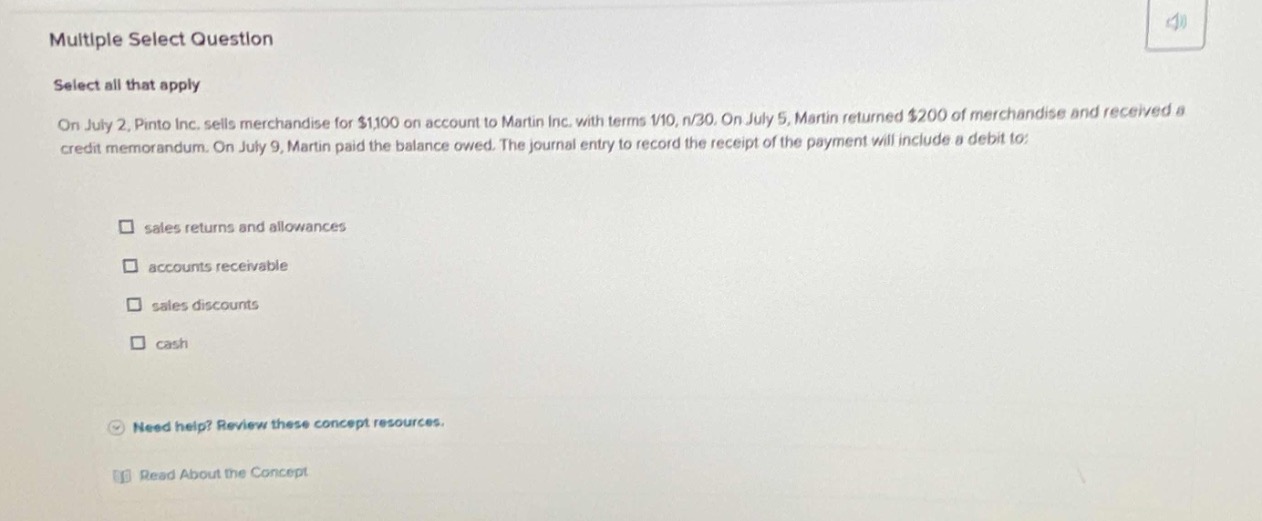
multiple select question\nselect all that apply\non july 2, pinto inc. sells merchandise for $1100 on account to martin inc. with terms 1/10, n/30. on july 5, martin returned $200 of merchandise and received a credit memorandum. on july 9, martin paid the balance owed. the journal entry to record the receipt of the payment will include a debit to:\nsales returns and allowances\naccounts receivable\nsales discounts\ncash\nneed help? review these concept resources.\nread about the concept
Answer
Explanation:
Step1: Calculate the balance due
The initial sale was $1100. Martin returned $200 of merchandise. So the balance due before considering the discount is $1100 - $200=$900. The terms are 1/10, n/30. Since Martin paid on July 9 (within the discount - period), they are eligible for a 1% discount. The discount amount is $900×0.01 = $9. The amount of cash received is $900 - $9=$891.
Step2: Analyze the journal - entry accounts
When recording the receipt of payment, cash is debited for the amount received ($891), sales discounts is debited for the discount amount ($9), and accounts receivable is credited for the balance due before the discount ($900). Sales returns and allowances was already recorded when the merchandise was returned.
Answer:
C. sales discounts D. cash