purchases sales units unit cost units selling price/unit 3/1 beginning inventory 100 $40 3/2 purchase 60 $50…
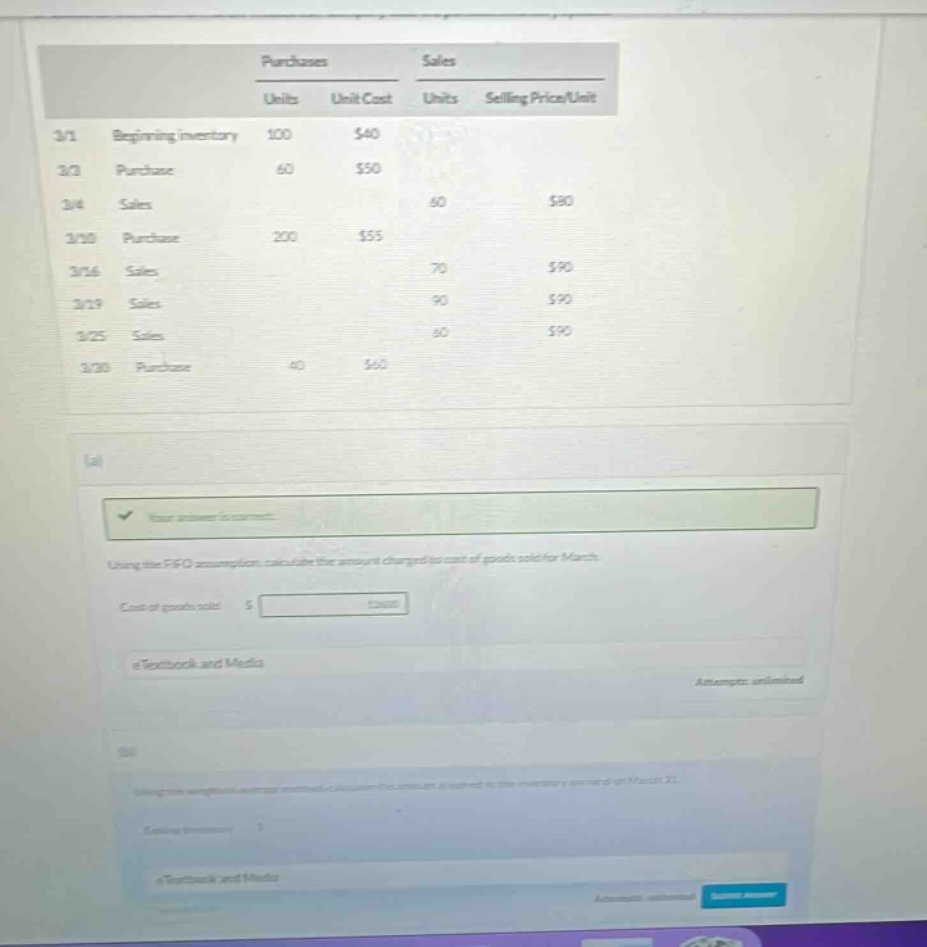
purchases sales units unit cost units selling price/unit 3/1 beginning inventory 100 $40 3/2 purchase 60 $50 3/4 sales 60 $80 3/10 purchase 200 $55 3/16 sales 70 $90 3/19 sales 90 $90 3/25 sales 60 $90 3/30 purchase 40 $60 (a) using the fifo assumption, calculate the amount charged to cost of goods sold for march. cost of goods sold: $ etextbook and media attempts: unlimited (b) using the weighted - average method, calculate the amount charged to cost of goods sold for march 31. cost of goods sold: $ etextbook and media attempts: unlimited submit answer
Answer
Explanation:
Step1: Calculate units sold
Total units sold = 60 + 70+90 + 60=280
Step2: Allocate costs using FIFO
- First, use up beginning - inventory: 100 units at $40 each, cost = 100×$40 = $4000
- Then, use units from 2/2 purchase: 60 units at $50 each, cost = 60×$50 = $3000
- Then, use units from 2/10 purchase: 280-(100 + 60)=120 units at $55 each, cost = 120×$55 = $6600
Step3: Calculate cost of goods sold
Cost of goods sold = 4000+3000 + 6600=$13600
Answer:
$13600