question 19 (mandatory) (2 points) an overstatement of ending inventory will cause an overstatement of…
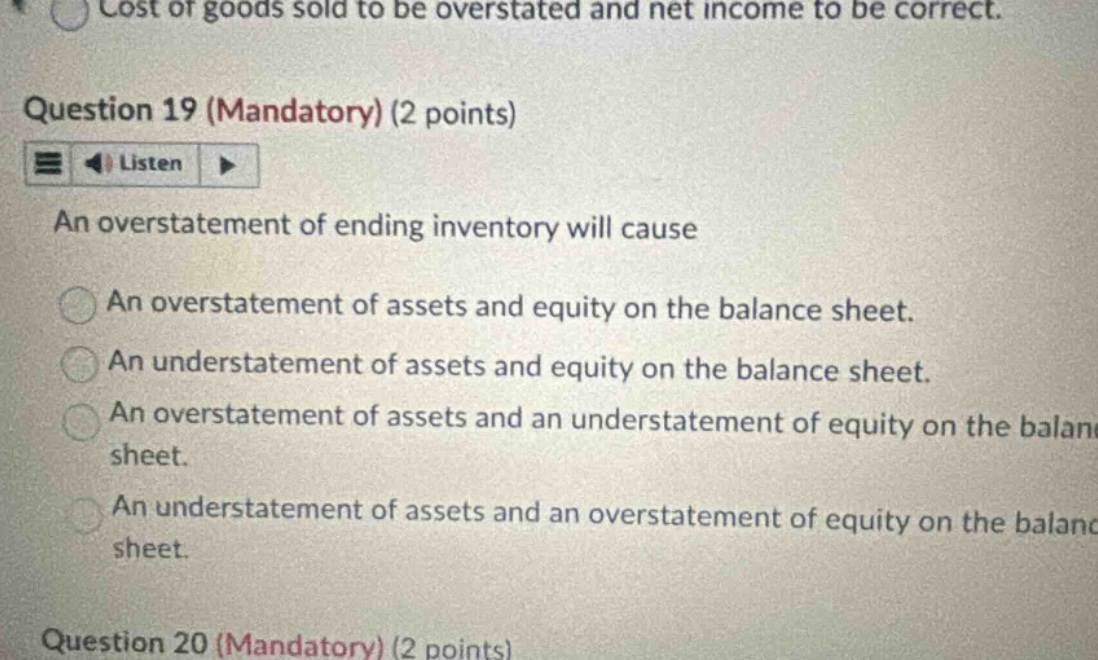
question 19 (mandatory) (2 points) an overstatement of ending inventory will cause an overstatement of assets and equity on the balance sheet. an understatement of assets and equity on the balance sheet. an overstatement of assets and an understatement of equity on the balance sheet. an understatement of assets and an overstatement of equity on the balance sheet. question 20 (mandatory) (2 points)
Answer
Brief Explanations:
Ending inventory is an asset. Over - stating it over - states assets. Also, since Cost of Goods Sold (COGS) = Beginning Inventory + Purchases - Ending Inventory, over - stating ending inventory under - states COGS. Net Income = Revenue - COGS - Other Expenses, so under - stated COGS leads to over - stated Net Income and over - stated Retained Earnings which is part of equity. So, over - stating ending inventory over - states both assets and equity on the balance sheet.
Answer:
An overstatement of assets and equity on the balance sheet.