scenario 4: ethical dilemma\nyou discover that a high - performing employee, morgan, has been engaging in…
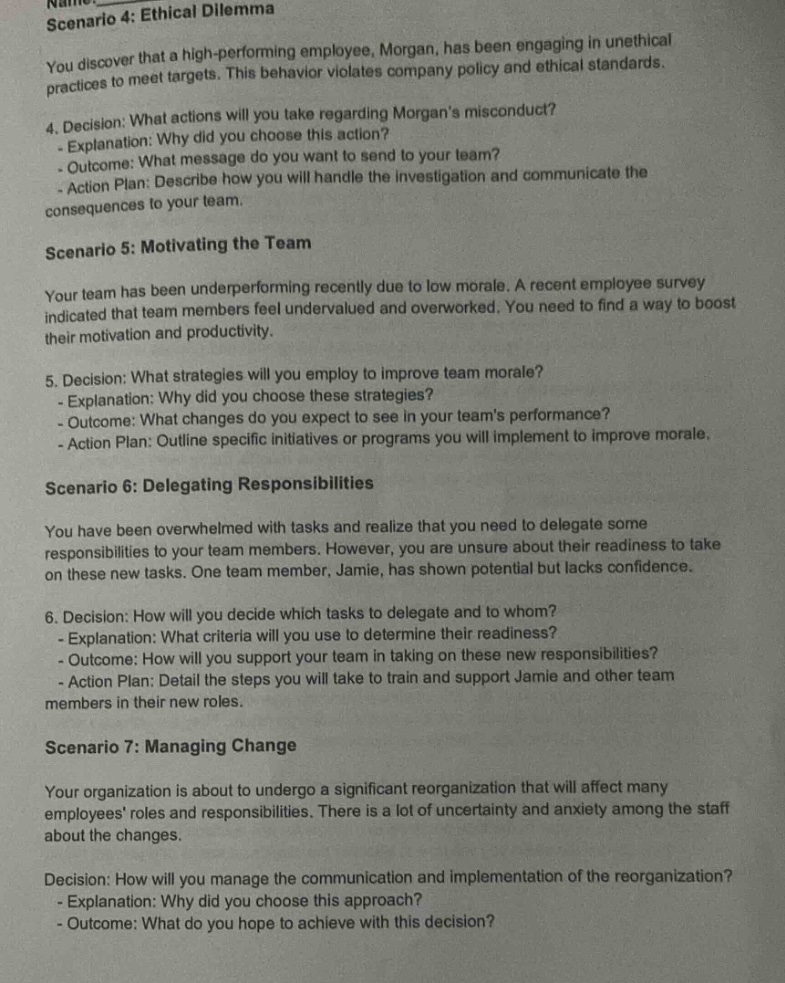
scenario 4: ethical dilemma\nyou discover that a high - performing employee, morgan, has been engaging in unethical practices to meet targets. this behavior violates company policy and ethical standards.\n4. decision: what actions will you take regarding morgans misconduct?\n- explanation: why did you choose this action?\n- outcome: what message do you want to send to your team?\n- action plan: describe how you will handle the investigation and communicate the consequences to your team.\n\nscenario 5: motivating the team\nyour team has been underperforming recently due to low morale. a recent employee survey indicated that team members feel undervalued and overworked. you need to find a way to boost their motivation and productivity.\n5. decision: what strategies will you employ to improve team morale?\n- explanation: why did you choose these strategies?\n- outcome: what changes do you expect to see in your teams performance?\n- action plan: outline specific initiatives or programs you will implement to improve morale.\n\nscenario 6: delegating responsibilities\nyou have been overwhelmed with tasks and realize that you need to delegate some responsibilities to your team members. however, you are unsure about their readiness to take on these new tasks. one team member, jamie, has shown potential but lacks confidence.\n6. decision: how will you decide which tasks to delegate and to whom?\n- explanation: what criteria will you use to determine their readiness?\n- outcome: how will you support your team in taking on these new responsibilities?\n- action plan: detail the steps you will take to train and support jamie and other team members in their new roles.\n\nscenario 7: managing change\nyour organization is about to undergo a significant reorganization that will affect many employees roles and responsibilities. there is a lot of uncertainty and anxiety among the staff about the changes.\ndecision: how will you manage the communication and implementation of the reorganization?\n- explanation: why did you choose this approach?\n- outcome: what do you hope to achieve with this decision?
Answer
Brief Explanations:
For Scenario 4: The decision could be to initiate a formal investigation and then impose appropriate disciplinary action based on findings. This is chosen to uphold company policies and ethical standards. The message to the team is that unethical behavior will not be tolerated. The action - plan includes gathering evidence, interviewing relevant parties, and communicating the outcome to the team. For Scenario 5: Strategies could include recognition programs, flexible work arrangements, and team - building activities. These are chosen as they address feelings of undervaluation and overwork. Expected changes in performance are increased productivity and better quality of work. The action - plan involves setting up a monthly recognition system, introducing flexible hours, and organizing quarterly team - building events. For Scenario 6: Decide on tasks based on complexity and match them with team members' skills and experience. Criteria for readiness include past performance, ability to learn quickly, and expressed interest. Support the team by providing clear instructions, regular feedback, and access to resources. For Jamie, offer one - on - one coaching and additional training materials. For Scenario 7: Manage communication by being transparent, providing regular updates, and holding town - hall meetings. This approach is chosen to reduce uncertainty and anxiety. The hoped - for outcome is a smooth transition with minimal disruption and staff buy - in.
Answer:
Scenario 4: Decision: Initiate a formal investigation and impose disciplinary action as per findings. Explanation: To uphold company policies and ethical standards. Outcome: Send a message that unethical behavior is not tolerated. Action Plan: Gather evidence, interview relevant parties, communicate outcome to team. Scenario 5: Decision: Implement recognition programs, flexible work arrangements, and team - building activities. Explanation: Address feelings of undervaluation and overwork. Outcome: Increased productivity and better work quality. Action Plan: Set up monthly recognition system, introduce flexible hours, organize quarterly team - building events. Scenario 6: Decision: Match tasks with team members' skills and experience. Explanation: Use past performance, learning ability, and interest as criteria. Outcome: Support team in taking on new responsibilities. Action Plan: Provide clear instructions, regular feedback, one - on - one coaching for Jamie, access to resources. Scenario 7: Decision: Be transparent, provide regular updates, hold town - hall meetings. Explanation: Reduce uncertainty and anxiety. Outcome: Smooth transition with staff buy - in.