section 1: what is renters insurance?\nwatch the video at the top of the page that briefly explains what…
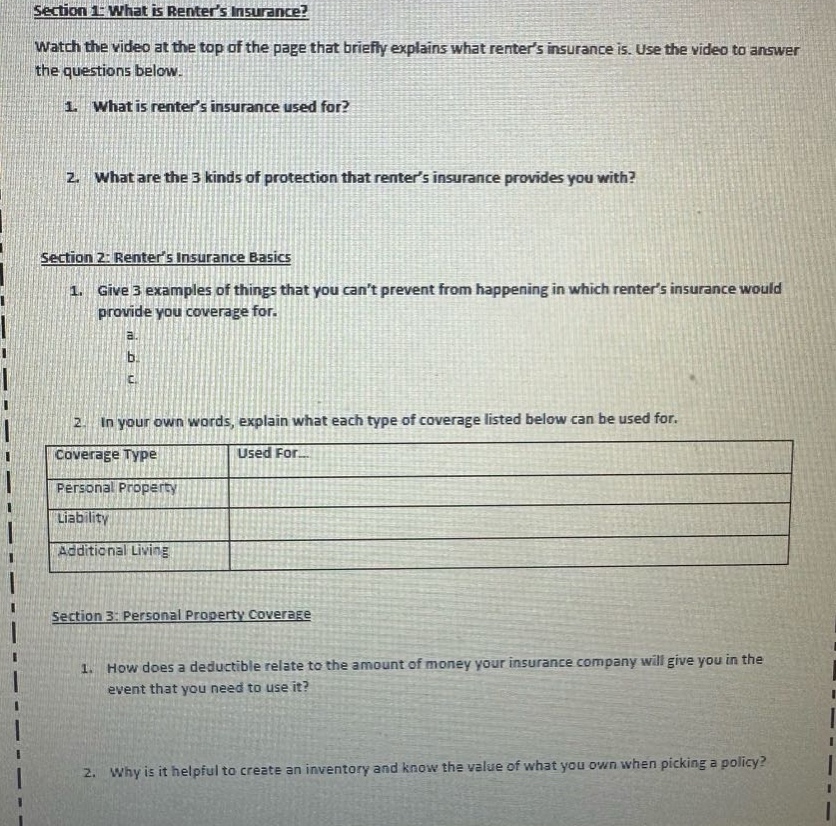
section 1: what is renters insurance?\nwatch the video at the top of the page that briefly explains what renters insurance is. use the video to answer the questions below.\n1. what is renters insurance used for?\n2. what are the 3 kinds of protection that renters insurance provides you with?\nsection 2: renters insurance basics\n1. give 3 examples of things that you cant prevent from happening in which renters insurance would provide you coverage for.\n a.\n b.\n c.\n2. in your own words, explain what each type of coverage listed below can be used for.\n|coverage type|used for...|\n|--|--|\n|personal property|\n|liability|\n|additional living|\nsection 3: personal property coverage\n1. how does a deductible relate to the amount of money your insurance company will give you in the event that you need to use it?\n2. why is it helpful to create an inventory and know the value of what you own when picking a policy?
Answer
Brief Explanations:
- Renter's insurance is used to protect renters' personal property, provide liability coverage in case they are responsible for damages or injuries to others, and cover additional living expenses if their rented - property becomes uninhabitable.
- The three kinds of protection are personal property protection (covers loss or damage to renters' belongings), liability protection (covers legal costs and damages if renter is at - fault for injury or property damage to others), and additional living expense protection (covers costs of temporary housing and living if the rental is unlivable).
- a. Natural disasters like floods (if not specifically excluded in the policy). b. Burglary. c. Fire.
- Personal Property: Used to reimburse for loss, damage, or theft of renters' personal belongings such as furniture, electronics, and clothing. Liability: Used to pay for legal defense costs and damages if the renter is held liable for injury or property damage to others. Additional Living: Used to cover costs of temporary housing, meals, and other living expenses when the rental property is uninhabitable due to a covered event.
- The deductible is the amount the renter must pay out - of - pocket before the insurance company starts paying. So, the insurance company will pay the claim amount minus the deductible.
- Creating an inventory and knowing the value of owned items helps in accurately determining the amount of coverage needed for personal property. This ensures that in case of a loss, the renter is adequately insured and can receive proper compensation for their belongings.
Answer:
- To protect personal property, provide liability coverage, and cover additional living expenses.
- Personal property protection, liability protection, additional living expense protection.
- a. Floods (if not excluded). b. Burglary. c. Fire.
- Personal Property: Reimburse for loss/damage/theft of personal belongings. Liability: Pay legal defense and damages for renter - caused injury/property damage. Additional Living: Cover temporary housing and living costs when rental is unlivable.
- Insurance company pays claim amount minus deductible.
- Helps determine proper coverage amount for personal property and ensures adequate compensation.