sheffield co. has equipment with a carrying amount of $2630000. the expected future net cash flows from the…
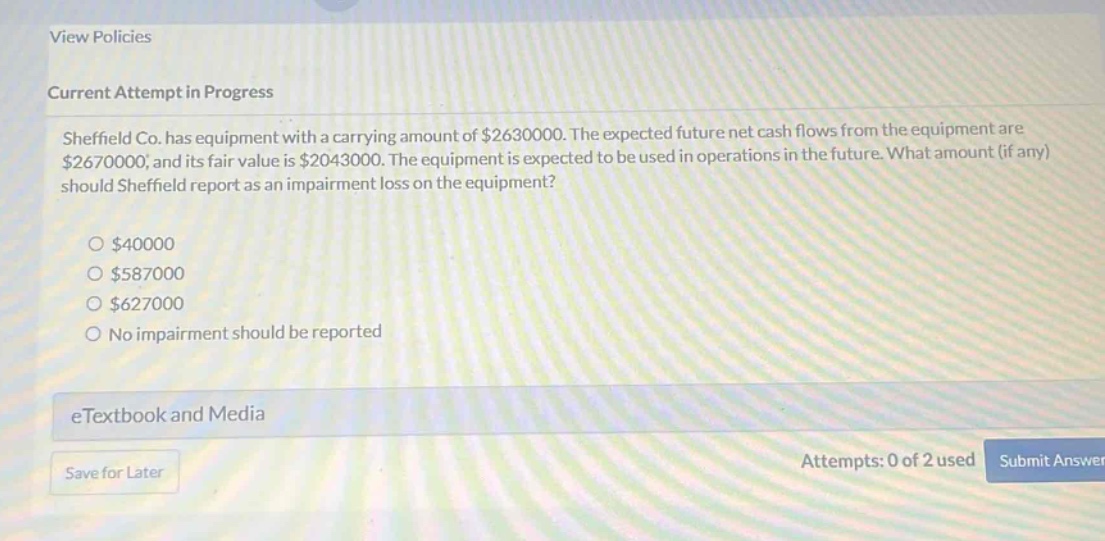
sheffield co. has equipment with a carrying amount of $2630000. the expected future net cash flows from the equipment are $2670000, and its fair value is $2043000. the equipment is expected to be used in operations in the future. what amount (if any) should sheffield report as an impairment loss on the equipment?\n\n$40000\n$587000\n$627000\nno impairment should be reported
Answer
Explanation:
Step1: Determine impairment test rule
An impairment loss occurs when the carrying amount of an asset exceeds its recoverable amount. The recoverable amount is the higher of the asset's fair - value less costs to sell and its value in use (expected future net cash flows). Here, the carrying amount is $2630000, the expected future net cash flows (value in use) is $2670000, and the fair value is $2043000.
Step2: Compare carrying amount and recoverable amount
The recoverable amount is the higher of the fair value and the expected future net cash flows. Since $2670000 (expected future net cash flows) > $2043000 (fair value), the recoverable amount is $2670000. The carrying amount is $2630000. Since the carrying amount ($2630000) < recoverable amount ($2670000), there is no impairment.
Answer:
No impairment should be reported