this is toms check register. select all of the true statements. tom withdrew $120 on april 5. on april 10…
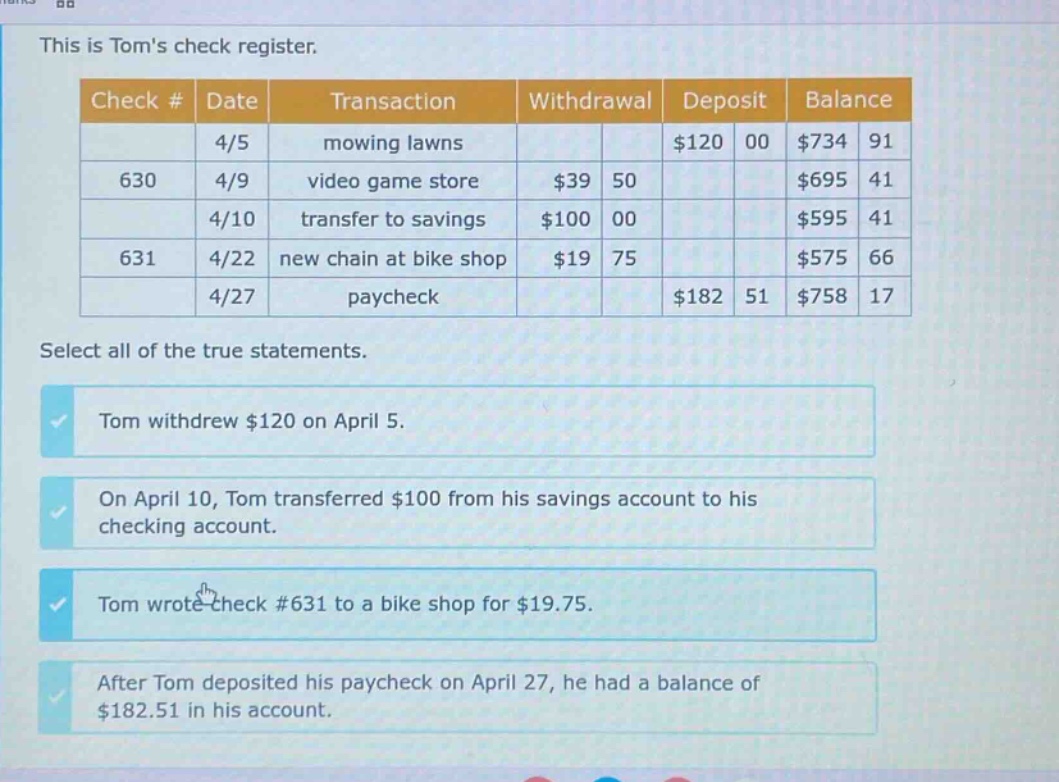
this is toms check register. select all of the true statements. tom withdrew $120 on april 5. on april 10, tom transferred $100 from his savings account to his checking account. tom wrote check #631 to a bike shop for $19.75. after tom deposited his paycheck on april 27, he had a balance of $182.51 in his account.
Answer
Explanation:
Step1: Analyze April 5 transaction
On 4/5, deposit is $120, not withdrawal. So "Tom withdrew $120 on April 5" is false.
Step2: Analyze April 10 transaction
On 4/10, it's a $100 withdrawal for transfer to savings, not from savings to checking. So "On April 10, Tom transferred $100 from his savings account to his checking account" is false.
Step3: Analyze check #631
On 4/22, check #631 is for new chain at bike - shop with a $19.75 withdrawal. So "Tom wrote check #631 to a bike shop for $19.75" is true.
Step4: Analyze April 27 transaction
On 4/27, after depositing paycheck of $182.51, balance is $758.17, not $182.51. So "After Tom deposited his paycheck on April 27, he had a balance of $182.51 in his account" is false.
Answer:
Tom wrote check #631 to a bike shop for $19.75.