tools to tackle conflict\nconflict is inevitable, its a natural part of working with others and can be an…
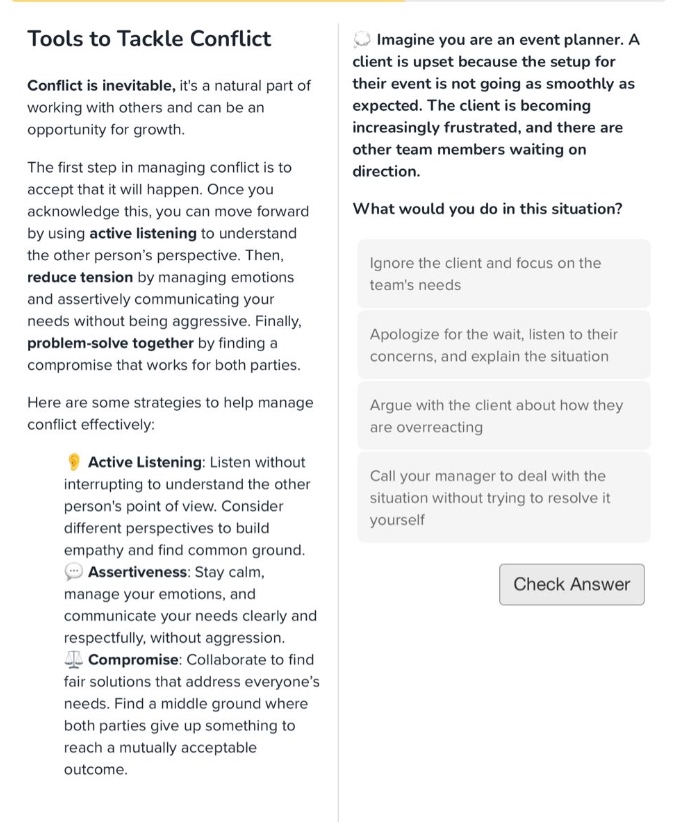
tools to tackle conflict\nconflict is inevitable, its a natural part of working with others and can be an opportunity for growth.\nthe first step in managing conflict is to accept that it will happen. once you acknowledge this, you can move forward by using active listening to understand the other persons perspective. then, reduce tension by managing emotions and assertively communicating your needs without being aggressive. finally, problem - solve together by finding a compromise that works for both parties.\nhere are some strategies to help manage conflict effectively:\nactive listening: listen without interrupting to understand the other persons point of view. consider different perspectives to build empathy and find common ground.\nassertiveness: stay calm, manage your emotions, and communicate your needs clearly and respectfully, without aggression.\ncompromise: collaborate to find fair solutions that address everyones needs. find a middle ground where both parties give up something to reach a mutually acceptable outcome.\nimagine you are an event planner. a client is upset because the setup for their event is not going as smoothly as expected. the client is becoming increasingly frustrated, and there are other team members waiting on direction.\nwhat would you do in this situation?\nignore the client and focus on the teams needs\napologize for the wait, listen to their concerns, and explain the situation\nargue with the client about how they are overreacting\ncall your manager to deal with the situation without trying to resolve it yourself\ncheck answer
Answer
Answer:
Apologize for the wait, listen to their concerns, and explain the situation
Brief Explanations:
This option follows conflict - management strategies like active listening and assertiveness. Ignoring the client, arguing, or passing the problem to the manager are not effective conflict - resolution methods.