24. the chemical action of yeast on sugars is called\na. intoxication\nb. oxidation\nc. fermentation\nd…
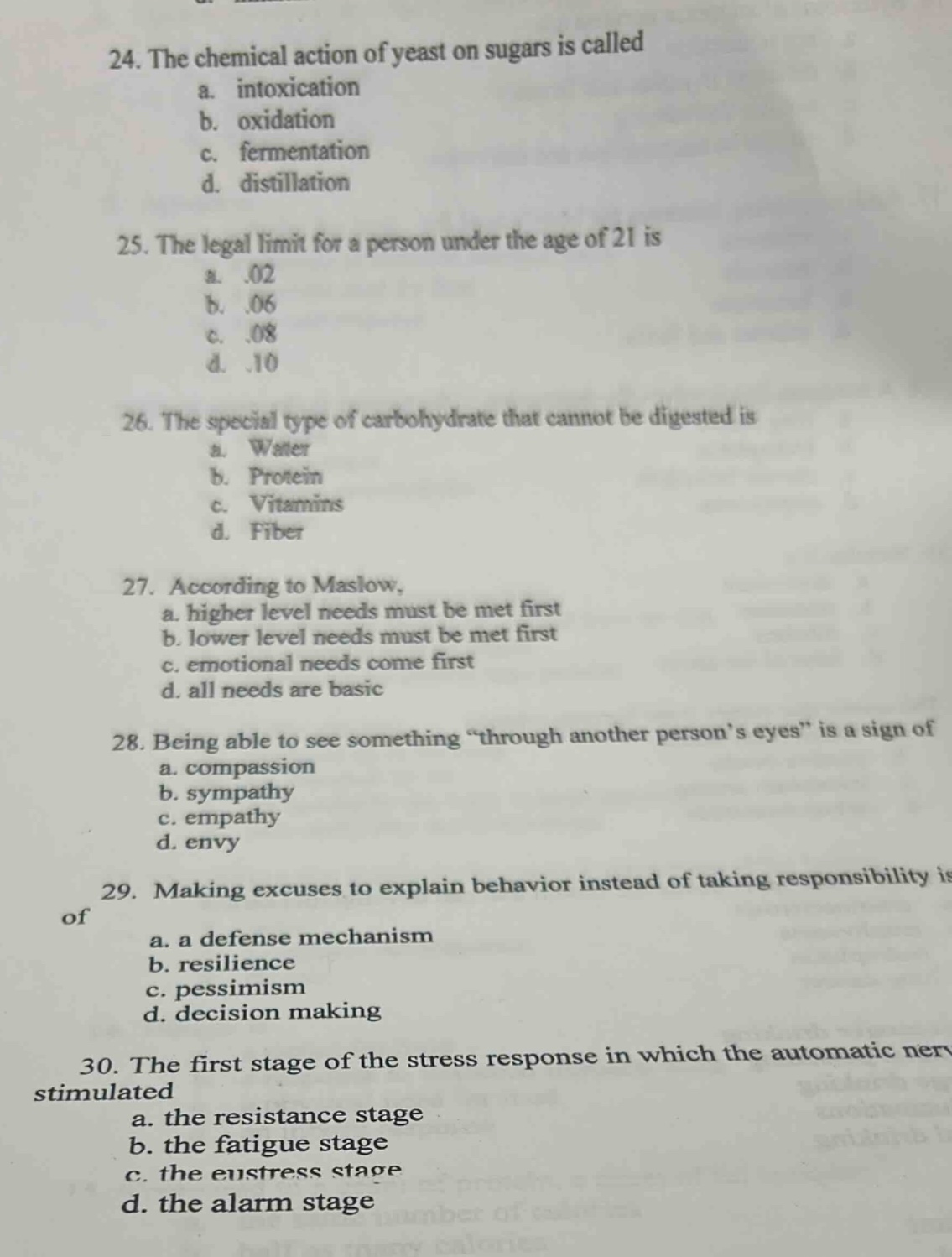
24. the chemical action of yeast on sugars is called\na. intoxication\nb. oxidation\nc. fermentation\nd. distillation\n25. the legal limit for a person under the age of 21 is\na..02\nb..06\nc..08\nd..10\n26. the special type of carbohydrate that cannot be digested is\na. water\nb. protein\nc. vitamins\nd. fiber\n27. according to maslow,\na. higher level needs must be met first\nb. lower level needs must be met first\nc. emotional needs come first\nd. all needs are basic\n28. being able to see something “through another person’s eyes” is a sign of\na. compassion\nb. sympathy\nc. empathy\nd. envy\n29. making excuses to explain behavior instead of taking responsibility is of\na. a defense mechanism\nb. resilience\nc. pessimism\nd. decision making\n30. the first stage of the stress response in which the automatic nerve is stimulated\na. the resistance stage\nb. the fatigue stage\nc. the eustress stage\nd. the alarm stage
Answer
Brief Explanations:
- Pregunta 24: La fermentación es la acción química de la levadura en los azúcares.
- Pregunta 25: En muchos lugares, el límite legal de alcohol en sangre para personas menores de 21 años es de 0,02.
- Pregunta 26: La fibra es un tipo de carbohidrato que no se puede digerir.
- Pregunta 27: Según Maslow, primero deben satisfacerse las necesidades de nivel más bajo.
- Pregunta 28: Ver las cosas a través de los ojos de otra persona es un signo de empatía.
- Pregunta 29: Hacer excusas en lugar de asumir responsabilidad es un mecanismo de defensa.
- Pregunta 30: La primera etapa de la respuesta al estrés en la que el sistema nervioso automático se estimula es la etapa de alarma.
Answer:
- c. fermentación
- a..02
- d. Fiber
- b. lower level needs must be met first
- c. empathy
- a. a defense mechanism
- d. the alarm stage