10. study the information in the table. two reactions reaction description 1 a match burns. 2 a steel nail…
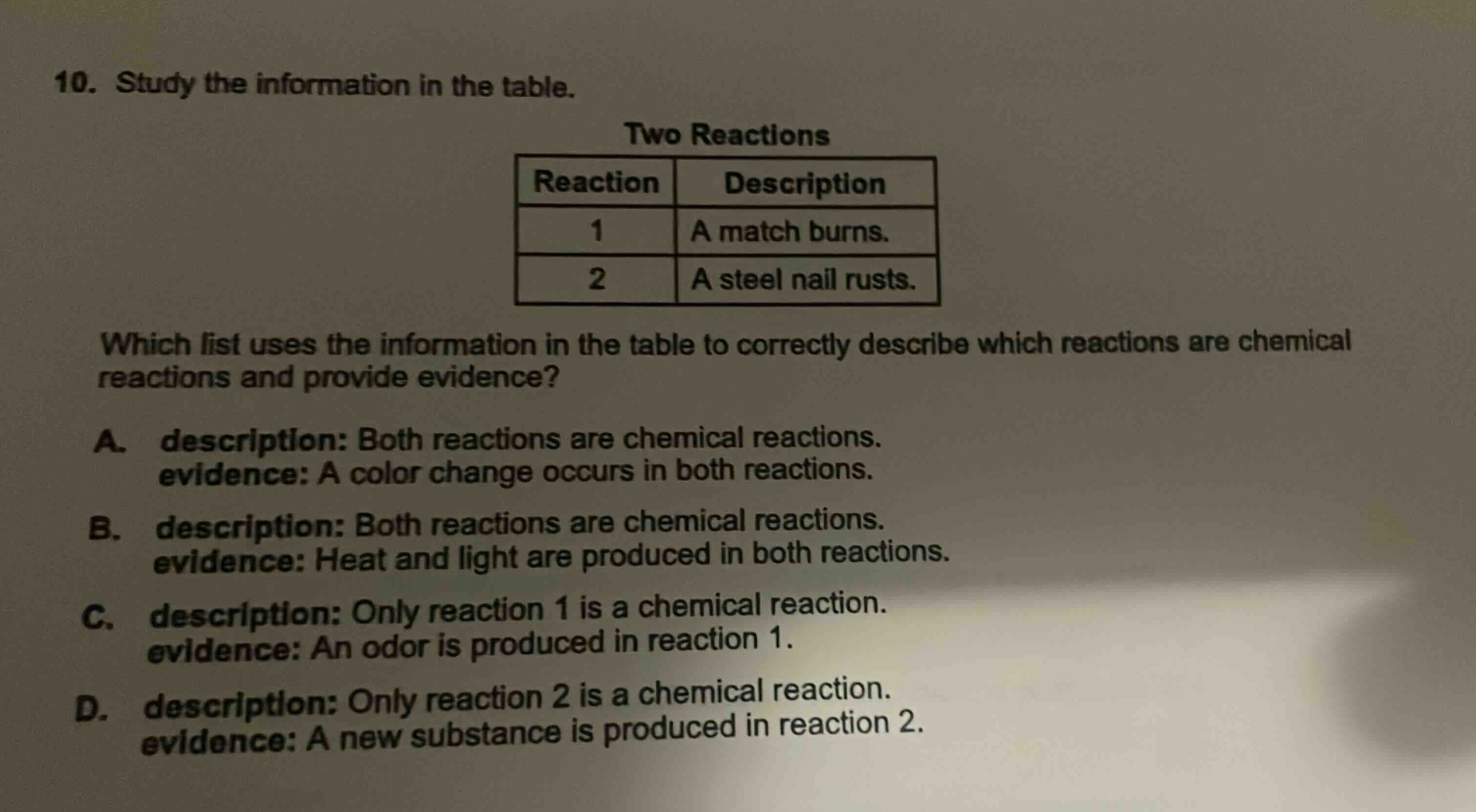
10. study the information in the table. two reactions reaction description 1 a match burns. 2 a steel nail rusts. which list uses the information in the table to correctly describe which reactions are chemical reactions and provide evidence? a. description: both reactions are chemical reactions. evidence: a color change occurs in both reactions. b. description: both reactions are chemical reactions. evidence: heat and light are produced in both reactions. c. description: only reaction 1 is a chemical reaction. evidence: an odor is produced in reaction 1. d. description: only reaction 2 is a chemical reaction. evidence: a new substance is produced in reaction 2.
Answer
Brief Explanations:
A chemical reaction is characterized by the formation of a new substance. When a match burns, new substances like carbon - dioxide and ash are formed, and there is a color change, heat, and light production. When a steel nail rusts, iron reacts with oxygen to form iron oxide (rust), a new substance. Color change occurs in both reactions. Heat and light are produced in burning a match but not in rusting a nail. Odor is not the most definitive evidence for a chemical reaction here. Both are chemical reactions with color - change evidence.
Answer:
A. description: Both reactions are chemical reactions. evidence: A color change occurs in both reactions.