11. what electrode requires drying before using?\na. low hydrogen\nb. cellulosic\nc. rutile\nd. iron…
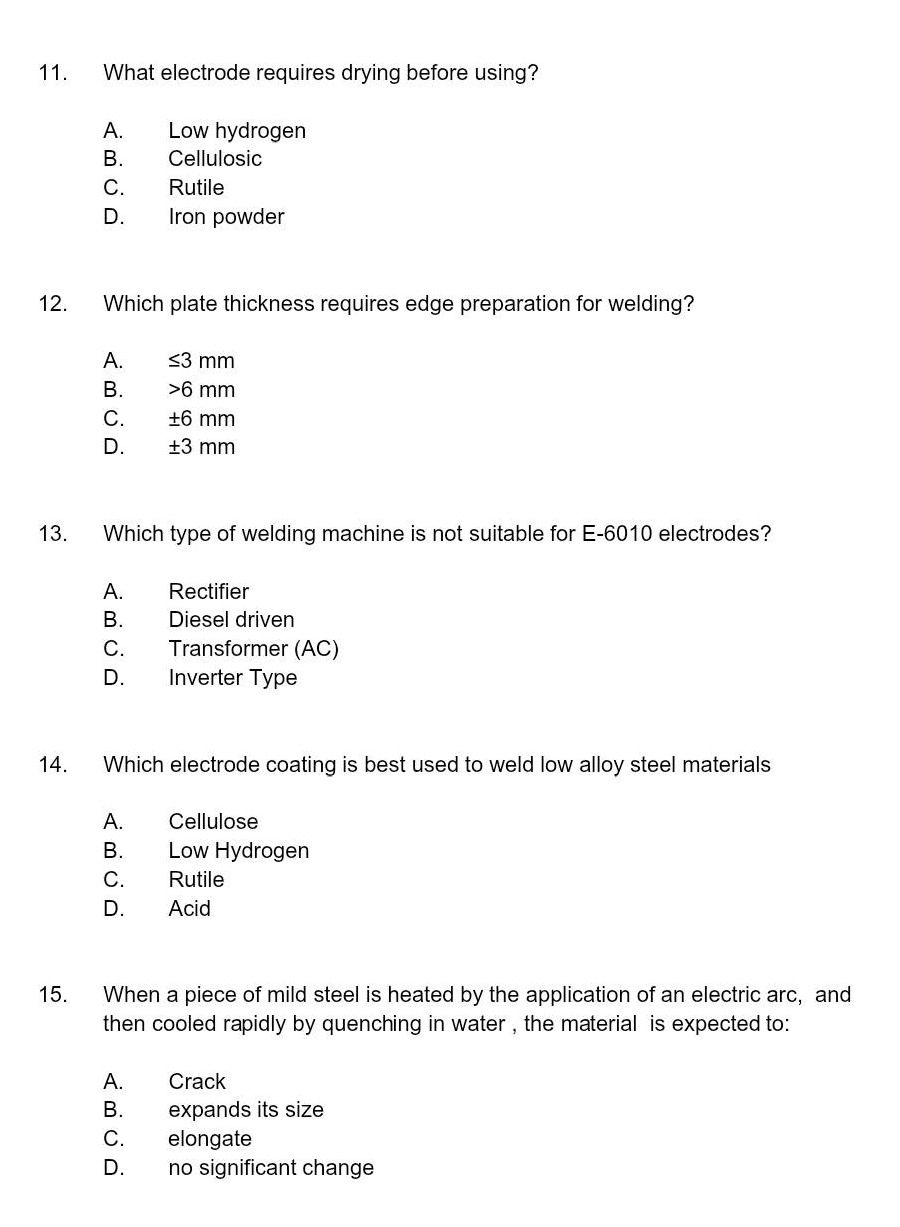
11. what electrode requires drying before using?\na. low hydrogen\nb. cellulosic\nc. rutile\nd. iron powder\n12. which plate thickness requires edge preparation for welding?\na. ≤3 mm\nb. >6 mm\nc. ±6 mm\nd. ±3 mm\n13. which type of welding machine is not suitable for e - 6010 electrodes?\na. rectifier\nb. diesel driven\nc. transformer (ac)\nd. inverter type\n14. which electrode coating is best used to weld low alloy steel materials\na. cellulose\nb. low hydrogen\nc. rutile\nd. acid\n15. when a piece of mild steel is heated by the application of an electric arc, and then cooled rapidly by quenching in water, the material is expected to:\na. crack\nb. expands its size\nc. elongate\nd. no significant change
Answer
Brief Explanations:
- Low - hydrogen electrodes can absorb moisture, so they need drying to prevent hydrogen - induced cracking during welding.
- For plates thicker than 6 mm, edge preparation is usually required for proper welding penetration and joint quality.
- Diesel - driven welding machines may not provide the stable electrical characteristics required for E - 6010 electrodes which are AC/DC electrodes and work well with rectifiers, transformers (AC), and inverter - type machines.
- Low - hydrogen electrodes are commonly used for welding low - alloy steel materials as they offer good strength and low hydrogen content which helps prevent cracking.
- When mild steel is rapidly cooled (quenched) after heating, it can crack due to the formation of high - stress martensite structure.
Answer:
- A. Low hydrogen
- B. >6 mm
- B. Diesel driven
- B. Low Hydrogen
- A. Crack