an atom is an example of a system, or a group of objects that interact with each other. scientists often use…
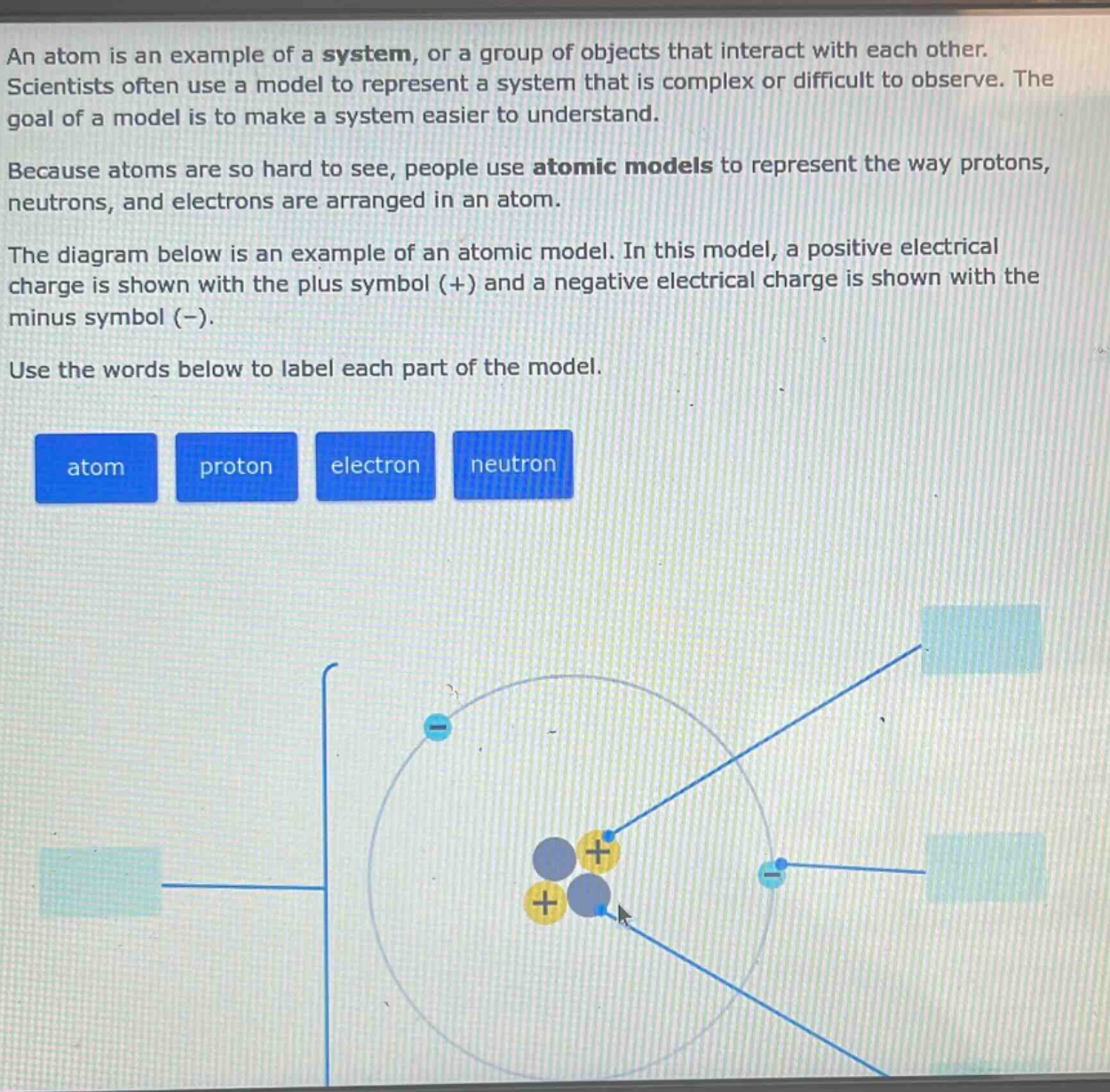
an atom is an example of a system, or a group of objects that interact with each other. scientists often use a model to represent a system that is complex or difficult to observe. the goal of a model is to make a system easier to understand. because atoms are so hard to see, people use atomic models to represent the way protons, neutrons, and electrons are arranged in an atom. the diagram below is an example of an atomic model. in this model, a positive electrical charge is shown with the plus symbol (+) and a negative electrical charge is shown with the minus symbol (-). use the words below to label each part of the model. atom proton electron neutron
Answer
Answer:
From left - to - right and top - to - bottom: atom, electron, proton, neutron
Brief Explanation:
The whole diagram represents an atom. Electrons are negatively charged and are in orbitals. Protons are positively charged and in the nucleus. Neutrons in the nucleus have no charge.