catalysts are used in the oil industry to increase octane ratings in gasoline. octane ratings tell how much…
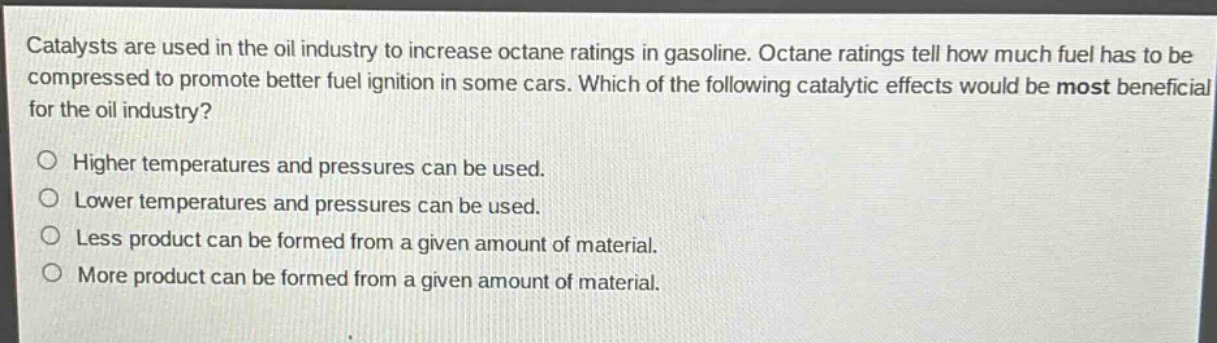
catalysts are used in the oil industry to increase octane ratings in gasoline. octane ratings tell how much fuel has to be compressed to promote better fuel ignition in some cars. which of the following catalytic effects would be most beneficial for the oil industry?\no higher temperatures and pressures can be used.\no lower temperatures and pressures can be used.\no less product can be formed from a given amount of material.\no more product can be formed from a given amount of material.
Answer
Answer:
D. More product can be formed from a given amount of material.
Explanation:
Step1: Analyze the role of catalysts
Catalysts speed up chemical reactions without being consumed.
Step2: Consider industrial benefits
In the oil industry, getting more product (higher octane - rated gasoline) from the same amount of reactant (crude oil fractions) is highly beneficial. Higher temperatures and pressures (Option A) are costly to maintain. Lower temperatures and pressures (Option B) don't directly address the goal of increasing product yield. Less product (Option C) is contrary to industrial interests. Option D, more product from a given amount of material, aligns with the goal of using catalysts to enhance the production of higher octane - rated gasoline in the oil industry.