cherylanne mixes together chemical a and chemical b in a test tube, forming chemical c. the mixture…
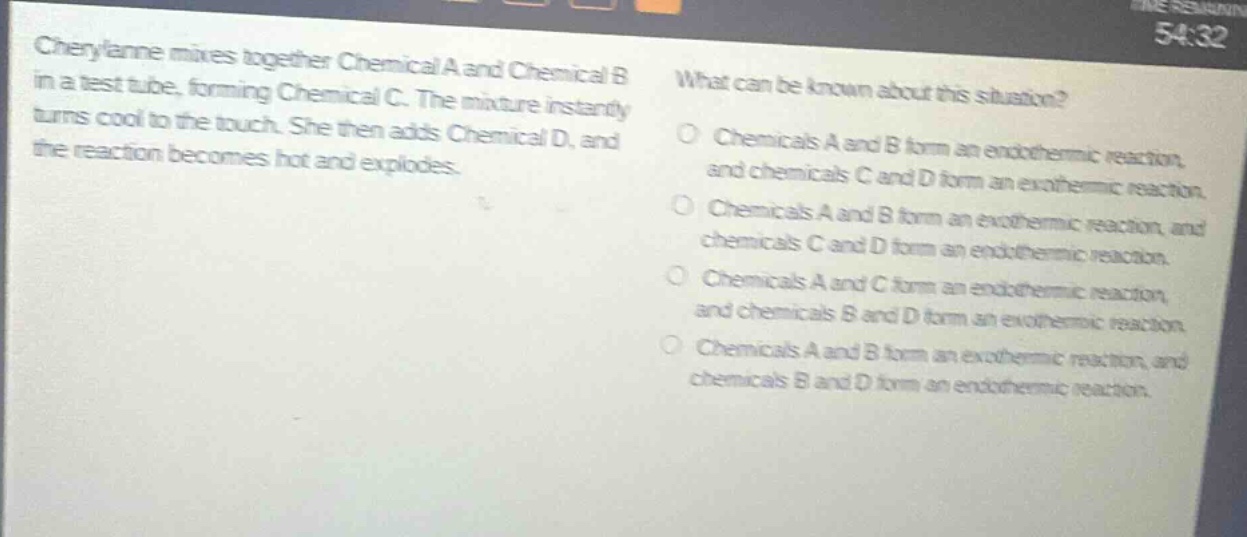
cherylanne mixes together chemical a and chemical b in a test tube, forming chemical c. the mixture instantly turns cool to the touch. she then adds chemical d, and the reaction becomes hot and explodes. what can be known about this situation? chemicals a and b form an endothermic reaction, and chemicals c and d form an exothermic reaction. chemicals a and b form an exothermic reaction, and chemicals c and d form an endothermic reaction. chemicals a and c form an endothermic reaction, and chemicals b and d form an exothermic reaction. chemicals a and b form an exothermic reaction, and chemicals b and d form an endothermic reaction.
Answer
Brief Explanations:
Endothermic reactions absorb heat, making the surroundings cooler. Exothermic reactions release heat, making the surroundings hotter. When Chemical A and B mix and turn cool, it's an endothermic reaction. When Chemical C and D react and become hot and explode, it's an exothermic reaction.
Answer:
Chemicals A and B form an endothermic reaction, and chemicals C and D form an exothermic reaction.