what conclusion can be drawn about the heat of vaporization of ethanol from the heating curve?\na the…
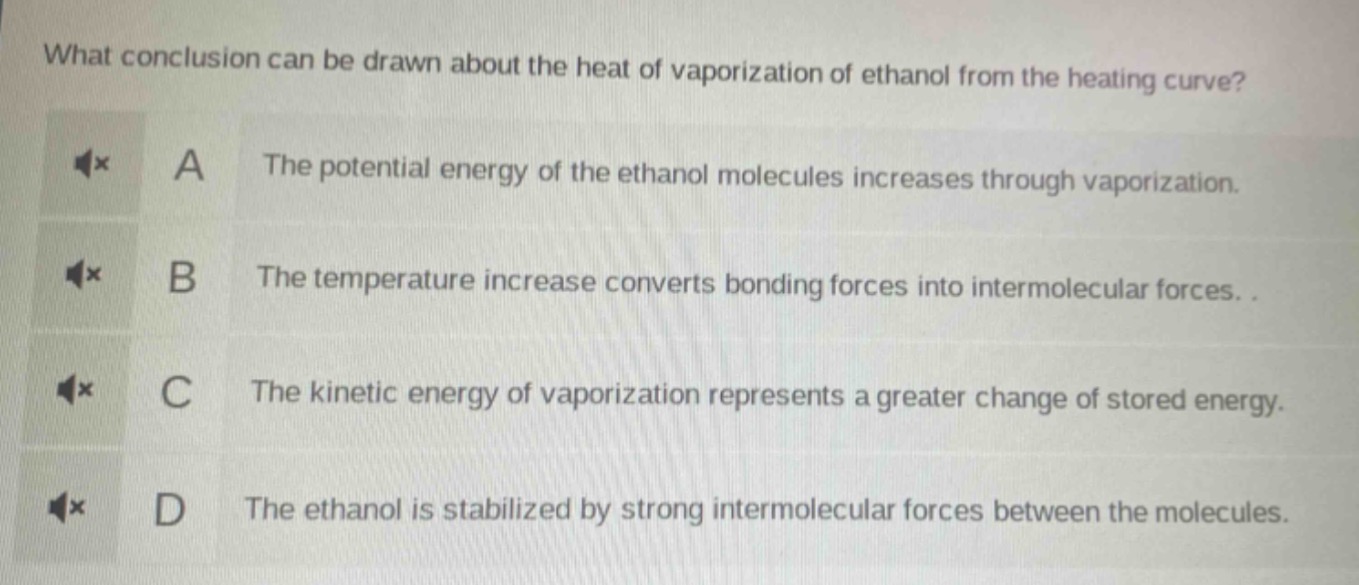
what conclusion can be drawn about the heat of vaporization of ethanol from the heating curve?\na the potential energy of the ethanol molecules increases through vaporization.\nb the temperature increase converts bonding forces into intermolecular forces.\nc the kinetic energy of vaporization represents a greater change of stored energy.\nd the ethanol is stabilized by strong intermolecular forces between the molecules.
Answer
Brief Explanations:
During vaporization of ethanol, heat is used to break the intermolecular forces between ethanol - molecules. Stronger intermolecular forces mean more heat is required for vaporization. A heating - curve shows the energy changes during phase changes. Ethanol has hydrogen - bonding (a strong intermolecular force), which requires a significant amount of energy to overcome during vaporization, stabilizing the liquid state of ethanol. Option A is about potential energy during vaporization but doesn't directly relate to heat of vaporization from the heating - curve perspective. Option B is incorrect as temperature increase doesn't convert bonding forces into intermolecular forces. Option C is not a correct description related to heat of vaporization from the heating - curve. Option D correctly implies that the strong intermolecular forces in ethanol affect its heat of vaporization as seen on the heating - curve.
Answer:
D. The ethanol is stabilized by strong intermolecular forces between the molecules.