consider the reaction.\n2so₂(g) + o₂(g)⇌2so₃(g)\nwhen does the given chemical system reach dynamic…
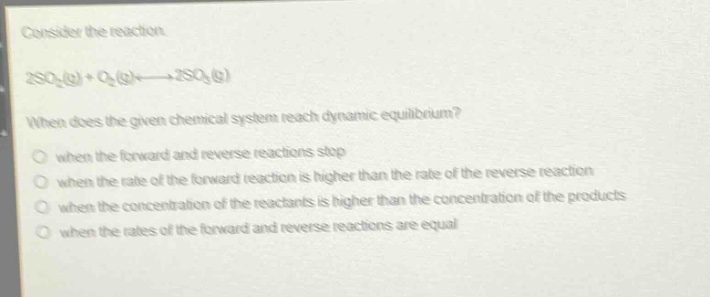
consider the reaction.\n2so₂(g) + o₂(g)⇌2so₃(g)\nwhen does the given chemical system reach dynamic equilibrium?\n○ when the forward and reverse reactions stop\n○ when the rate of the forward reaction is higher than the rate of the reverse reaction\n○ when the concentration of the reactants is higher than the concentration of the products\n○ when the rates of the forward and reverse reactions are equal
Answer
Answer:
D. when the rates of the forward and reverse reactions are equal
Brief Explanations:
In a chemical system at dynamic equilibrium, the forward and reverse reactions occur at the same rate. This results in no net change in the concentrations of reactants and products over time. Options A, B, and C do not correctly define dynamic - equilibrium conditions.