consider the redox reaction below.\nmg(s) + fe^{2+}(aq)→mg^{2+}(aq) + fe(s)\nwhich equation is a half…
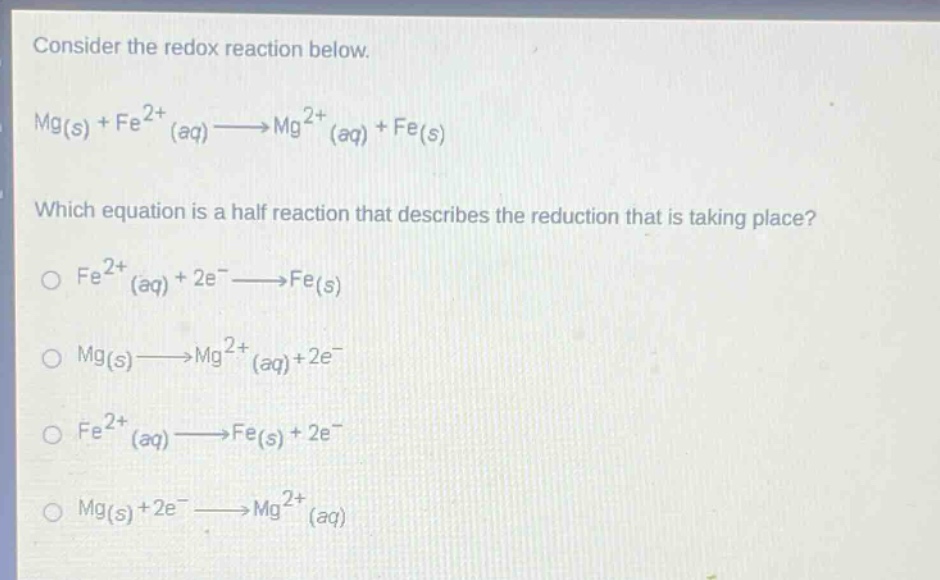
consider the redox reaction below.\nmg(s) + fe^{2+}(aq)→mg^{2+}(aq) + fe(s)\nwhich equation is a half - reaction that describes the reduction that is taking place?\n○ fe^{2+}(aq)+2e^−→fe(s)\n○ mg(s)→mg^{2+}(aq)+2e^−\n○ fe^{2+}(aq)→fe(s)+2e^−\n○ mg(s)+2e^−→mg^{2+}(aq)
Answer
Brief Explanations:
Reduction is the gain of electrons. In the given redox reaction, iron(II) ion ($Fe^{2 + }$) gains 2 electrons to form iron metal ($Fe$). The half - reaction for reduction shows the species gaining electrons.
Answer:
$Fe^{2+}{(aq)} + 2e^-\longrightarrow Fe{(s)}$