the dissociation of a weak electrolyte is suppressed when\no a strong electrolyte with a common ion is added…
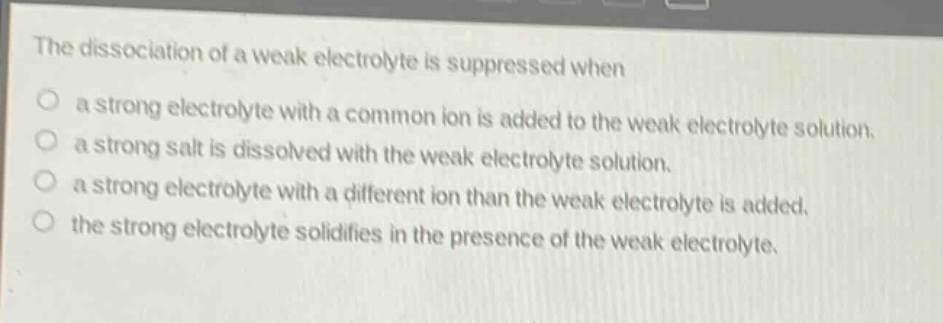
the dissociation of a weak electrolyte is suppressed when\no a strong electrolyte with a common ion is added to the weak electrolyte solution.\no a strong salt is dissolved with the weak electrolyte solution.\no a strong electrolyte with a different ion than the weak electrolyte is added.\no the strong electrolyte solidifies in the presence of the weak electrolyte.
Answer
Brief Explanations:
According to the common - ion effect, when a strong electrolyte with a common ion is added to a weak - electrolyte solution, the dissociation of the weak electrolyte is suppressed. This is because the increased concentration of the common ion shifts the equilibrium of the weak - electrolyte dissociation reaction to the left. For example, in a solution of acetic acid ($CH_3COOH\rightleftharpoons CH_3COO^ -+H^+$), if sodium acetate ($CH_3COONa$) is added, the acetate ions from sodium acetate increase the concentration of acetate ions in the solution, shifting the acetic - acid dissociation equilibrium to the left and suppressing the dissociation of acetic acid.
Answer:
a strong electrolyte with a common ion is added to the weak electrolyte solution.