how is energy related to the change of state represented by the model?\natoms gain energy as a solid changes…
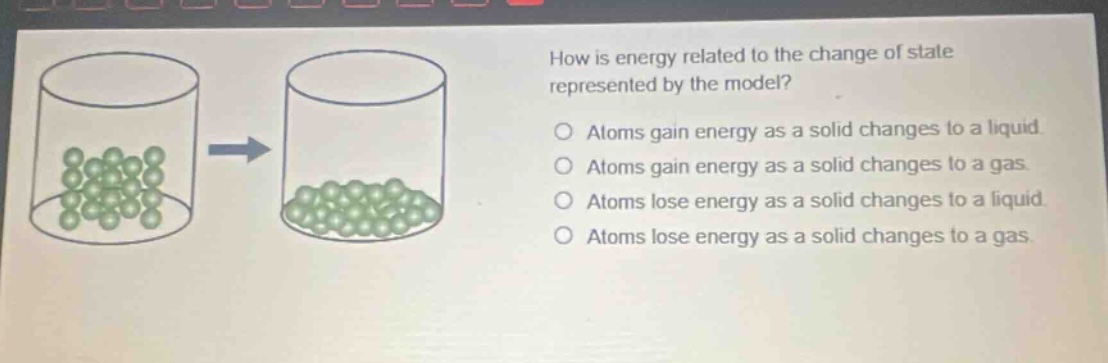
how is energy related to the change of state represented by the model?\natoms gain energy as a solid changes to a liquid\natoms gain energy as a solid changes to a gas\natoms lose energy as a solid changes to a liquid\natoms lose energy as a solid changes to a gas
Answer
Answer:
Atoms gain energy as a solid changes to a liquid
Explanation:
Step1: Understand state - change energy
When a substance changes from solid to liquid (melting) or solid to gas (sublimation), energy is required.
Step2: Analyze solid - to - liquid change
In the process of melting (solid to liquid), atoms need to break some of the intermolecular forces holding them in a fixed position in the solid state. This requires an input of energy, so atoms gain energy.
Step3: Analyze solid - to - gas change
When a solid changes to a gas (sublimation), even more energy is needed to completely break all intermolecular forces and allow the atoms to move freely as a gas. But the question is about the general concept related to the given model which seems to imply melting.
Step4: Eliminate wrong options
Atoms do not lose energy when changing from solid to liquid or solid to gas as energy input is required for these phase transitions. So, the options stating atoms lose energy are incorrect.