which of the following does not describe a chemical reaction? a. when solid sodium is placed in water, a…
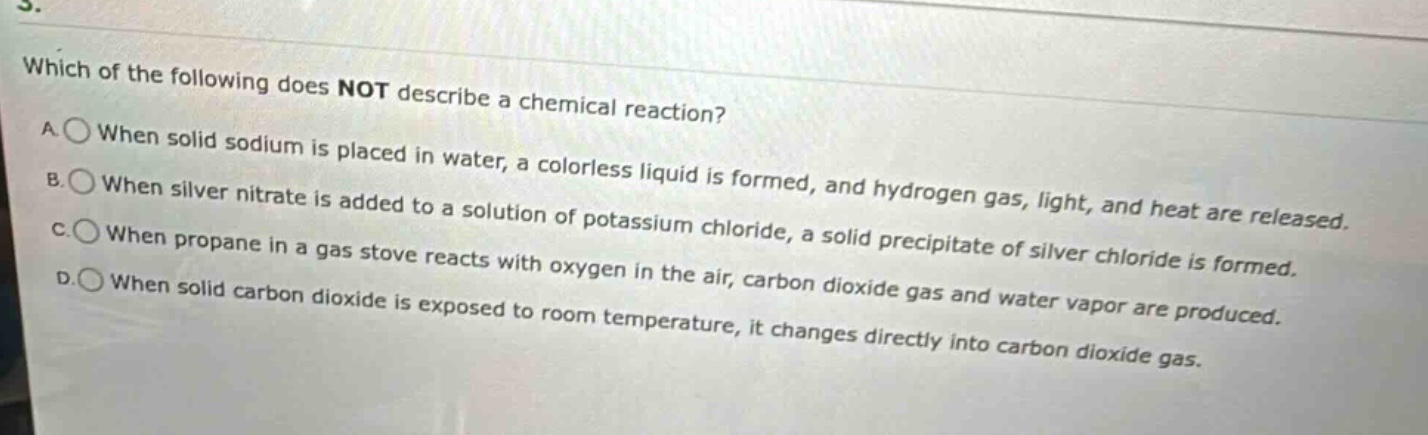
which of the following does not describe a chemical reaction? a. when solid sodium is placed in water, a colorless liquid is formed, and hydrogen gas, light, and heat are released. b. when silver nitrate is added to a solution of potassium chloride, a solid precipitate of silver chloride is formed. c. when propane in a gas stove reacts with oxygen in the air, carbon dioxide gas and water vapor are produced. d. when solid carbon dioxide is exposed to room temperature, it changes directly into carbon dioxide gas.
Answer
Brief Explanations:
A chemical reaction involves the formation of new substances with different chemical properties. In option D, solid carbon - dioxide (dry ice) changing directly into carbon - dioxide gas is a physical change called sublimation, where only the state of matter changes and no new chemical substances are formed. In options A, B, and C, new chemical substances are formed through chemical reactions.
Answer:
D. When solid carbon dioxide is exposed to room temperature, it changes directly into carbon dioxide gas.