henry mixed salt and water together in a cup until he observed a clear solution. he measured the mass of the…
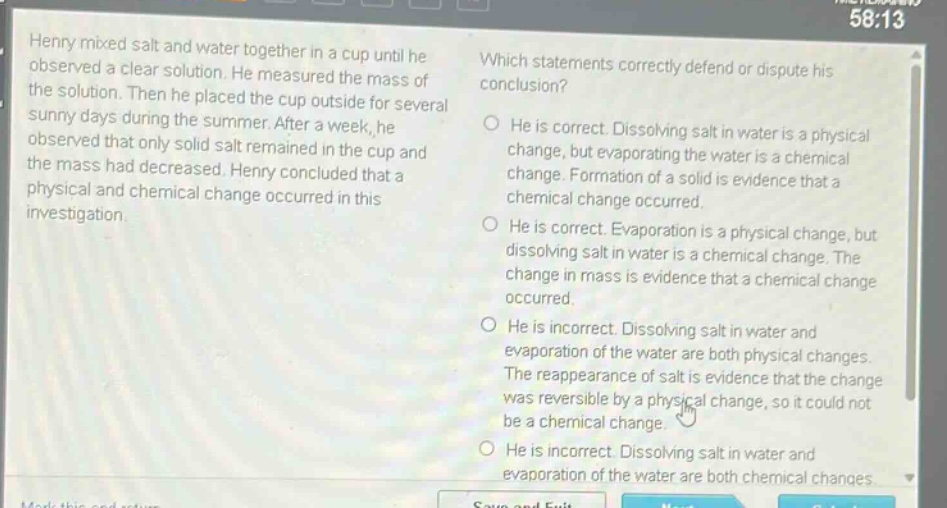
henry mixed salt and water together in a cup until he observed a clear solution. he measured the mass of the solution. then he placed the cup outside for several sunny days during the summer. after a week, he observed that only solid salt remained in the cup and the mass had decreased. henry concluded that a physical and chemical change occurred in this investigation. which statements correctly defend or dispute his conclusion? he is correct. dissolving salt in water is a physical change, but evaporating the water is a chemical change. formation of a solid is evidence that a chemical change occurred. he is correct. evaporation is a physical change, but dissolving salt in water is a chemical change. the change in mass is evidence that a chemical change occurred. he is incorrect. dissolving salt in water and evaporation of the water are both physical changes. the reappearance of salt is evidence that the change was reversible by a physical change, so it could not be a chemical change. he is incorrect. dissolving salt in water and evaporation of the water are both chemical changes.
Answer
Brief Explanations:
Dissolving salt in water is a physical change as no new substances are formed - it's just the salt ions separating in water. Evaporation of water is also a physical change as it's a phase - change from liquid to gas. The reappearance of salt upon evaporation shows the process is reversible by physical means, indicating no chemical change occurred.
Answer:
He is incorrect. Dissolving salt in water and evaporation of the water are both physical changes. The reappearance of salt is evidence that the change was reversible by a physical change, so it could not be a chemical change.