hypothesis: if a substance is the limiting reactant, then it will be fully consumed by the time the reaction…
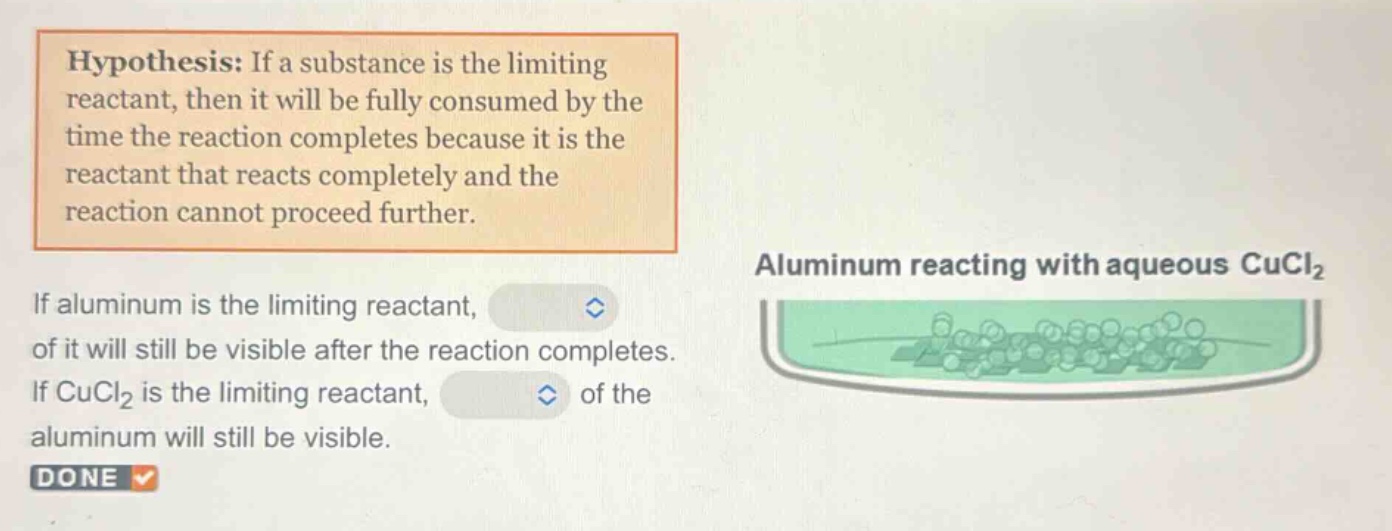
hypothesis: if a substance is the limiting reactant, then it will be fully consumed by the time the reaction completes because it is the reactant that reacts completely and the reaction cannot proceed further. if aluminum is the limiting reactant, of it will still be visible after the reaction completes. if cucl2 is the limiting reactant, of the aluminum will still be visible. done
Answer
Explanation:
Step1: Understand limiting reactant concept
The limiting reactant is fully - consumed in a reaction.
Step2: Analyze when aluminum is limiting
If aluminum is the limiting reactant, it will be fully consumed. So, none of it will be visible after the reaction.
Step3: Analyze when CuCl₂ is limiting
If CuCl₂ is the limiting reactant, aluminum is in excess. So, some of the aluminum will still be visible.
Answer:
If aluminum is the limiting reactant, none of it will still be visible after the reaction completes. If CuCl₂ is the limiting reactant, some of the aluminum will still be visible.