josh is making homemade lollipops. the recipe calls for dissolving 400 g sugar in 100 g of water. his…
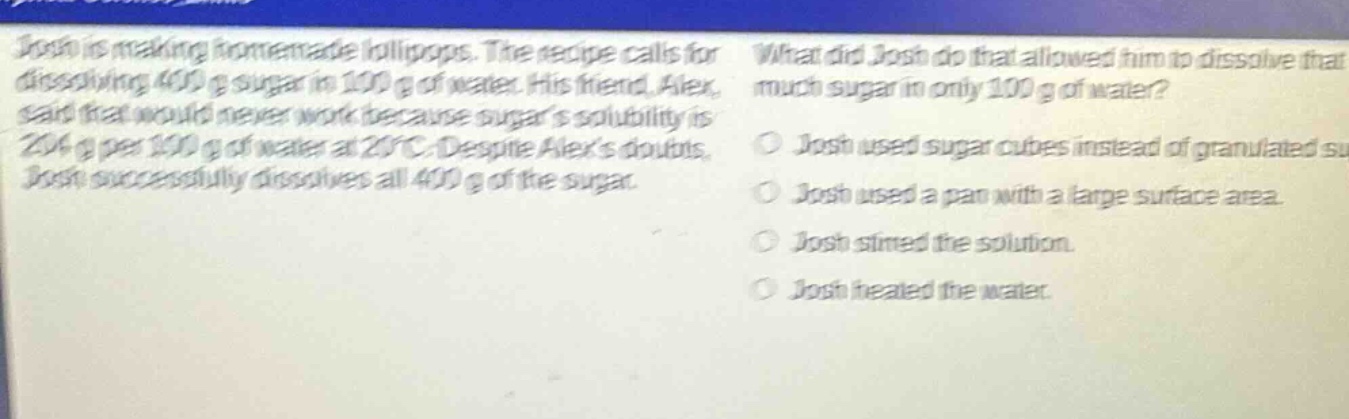
josh is making homemade lollipops. the recipe calls for dissolving 400 g sugar in 100 g of water. his friend, alex, said that would never work because sugars solubility is 204 g per 100 g of water at 20°c. despite alexs doubts, josh successfully dissolves all 400 g of the sugar. what did josh do that allowed him to dissolve that much sugar in only 100 g of water? josh used sugar cubes instead of granulated sugar. josh used a pan with a large surface area. josh stirred the solution. josh heated the water.
Answer
Brief Explanations:
The solubility of sugar in water increases with temperature. Heating the water would allow more sugar to dissolve than at room - temperature (20°C where the solubility is 204 g per 100 g of water). Using sugar cubes instead of granulated sugar affects the rate of dissolving but not the maximum amount that can dissolve. Using a pan with a large surface area and stirring affect the rate of dissolving, not the solubility limit.
Answer:
Josh heated the water.