this lab question is: how can you distinguish a physical change from a chemical change? which statements…
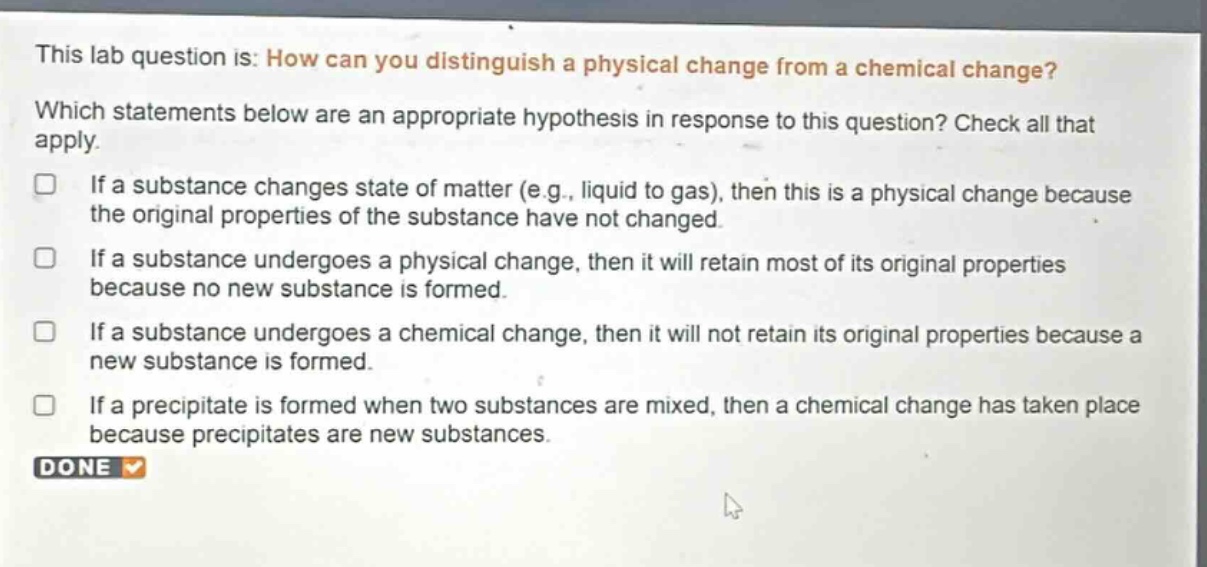
this lab question is: how can you distinguish a physical change from a chemical change? which statements below are an appropriate hypothesis in response to this question? check all that apply. if a substance changes state of matter (e.g., liquid to gas), then this is a physical change because the original properties of the substance have not changed. if a substance undergoes a physical change, then it will retain most of its original properties because no new substance is formed. if a substance undergoes a chemical change, then it will not retain its original properties because a new substance is formed. if a precipitate is formed when two substances are mixed, then a chemical change has taken place because precipitates are new substances. done
Answer
Brief Explanations:
A hypothesis is a proposed explanation for a phenomenon. Physical changes involve changes in state or form without altering the substance's identity, while chemical changes result in new substances. Each statement provides a proposed relationship between a change - type and its characteristics related to the identity and properties of substances.
Answer:
All of the above statements are appropriate hypotheses. So the checked - off statements would be:
- If a substance changes state of matter (e.g., liquid to gas), then this is a physical change because the original properties of the substance have not changed.
- If a substance undergoes a physical change, then it will retain most of its original properties because no new substance is formed.
- If a substance undergoes a chemical change, then it will not retain its original properties because a new substance is formed.
- If a precipitate is formed when two substances are mixed, then a chemical change has taken place because precipitates are new substances.