in a laboratory, nakisha mixes a sodium hydroxide solution with an indicator called phenolphthalein. when…
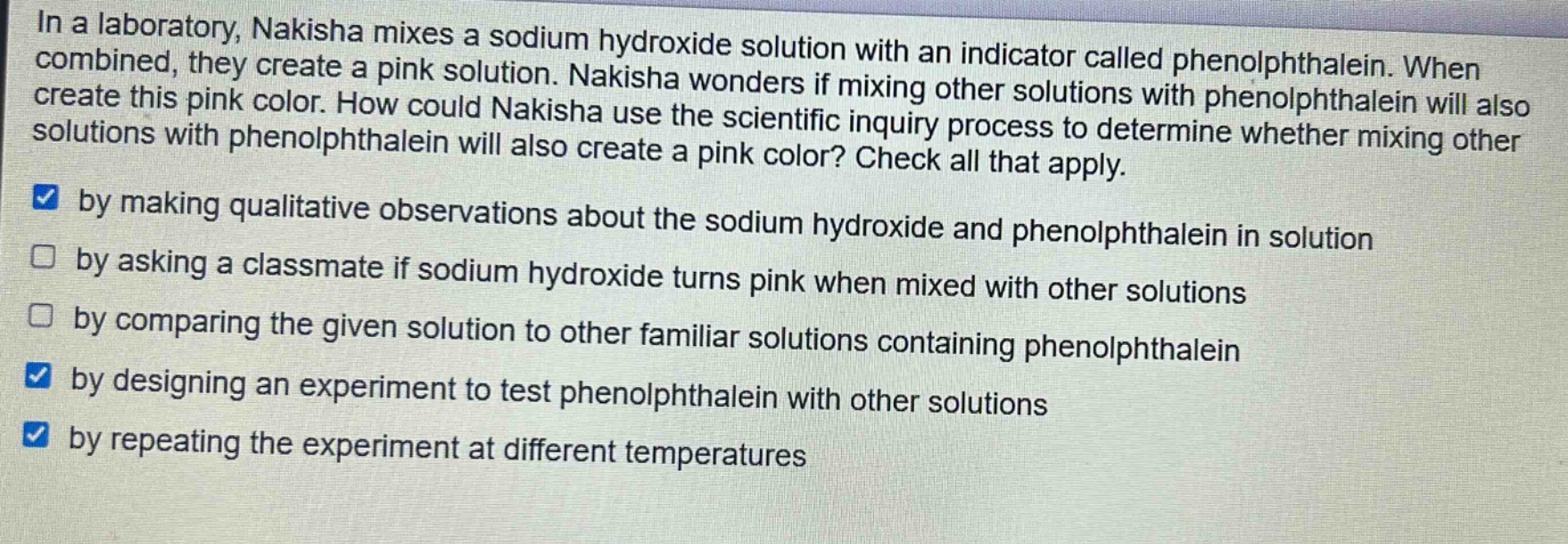
in a laboratory, nakisha mixes a sodium hydroxide solution with an indicator called phenolphthalein. when combined, they create a pink solution. nakisha wonders if mixing other solutions with phenolphthalein will also create this pink color. how could nakisha use the scientific inquiry process to determine whether mixing other solutions with phenolphthalein will also create a pink color? check all that apply. by making qualitative observations about the sodium hydroxide and phenolphthalein in solution by asking a classmate if sodium hydroxide turns pink when mixed with other solutions by comparing the given solution to other familiar solutions containing phenolphthalein by designing an experiment to test phenolphthalein with other solutions by repeating the experiment at different temperatures
Answer
Brief Explanations:
- Hacer observaciones cualitativas es parte del proceso de indagación científica, ya que se recopilan datos sobre la interacción de los componentes de la solución.
- Diseñar un experimento para probar fenolftaleína con otras soluciones permite recopilar datos directos sobre si se produce el color rosa.
- Repetir el experimento a diferentes temperaturas ayuda a identificar si la temperatura afecta la reacción y el color resultante, lo cual es una parte importante del proceso de indagación científica para controlar variables.
- Preguntar a un compañero no es una parte del proceso de indagación científica propio, ya que no implica recopilar datos directos.
- Comparar la solución dada con otras no es un paso del proceso de indagación científica para determinar específicamente si otras soluciones con fenolftaleína crearán el color rosa.
Answer:
- by making qualitative observations about the sodium hydroxide and phenolphthalein in solution
- by designing an experiment to test phenolphthalein with other solutions
- by repeating the experiment at different temperatures