match the intramolecular force with the physical property that will result. ionic covalent conducts…
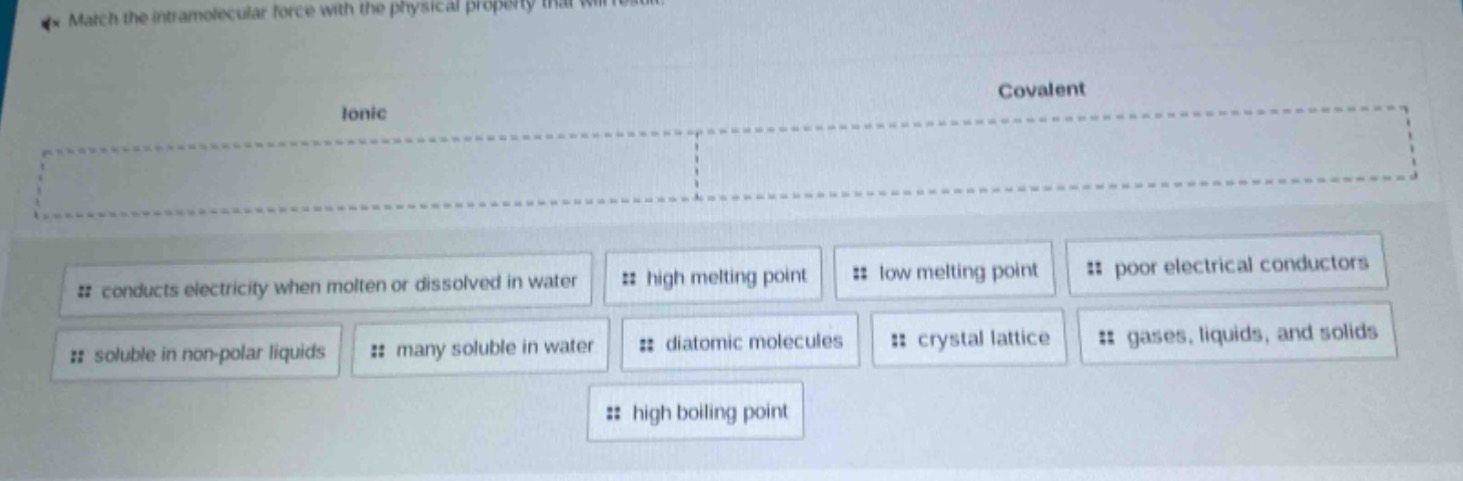
match the intramolecular force with the physical property that will result. ionic covalent conducts electricity when molten or dissolved in water high melting point low melting point poor electrical conductors soluble in non - polar liquids many soluble in water diatomic molecules crystal lattice gases, liquids, and solids high boiling point
Answer
Brief Explanations:
Ionic compounds have strong electrostatic forces between ions. They form a crystal - lattice structure, conduct electricity when molten or dissolved in water due to mobile ions, have high melting and boiling points, and many are soluble in water. Covalent compounds have weaker intermolecular forces in general. They are often poor electrical conductors, have low melting and boiling points, can exist as gases, liquids, and solids, and are more likely to be soluble in non - polar liquids. Diatomic molecules are often covalent.
Answer:
Ionic: conducts electricity when molten or dissolved in water, high melting point, many soluble in water, crystal lattice, high boiling point Covalent: low melting point, poor electrical conductors, soluble in non - polar liquids, diatomic molecules, gases, liquids, and solids