these models show the electron structures of two different nonmetal elements. which element is likely more…
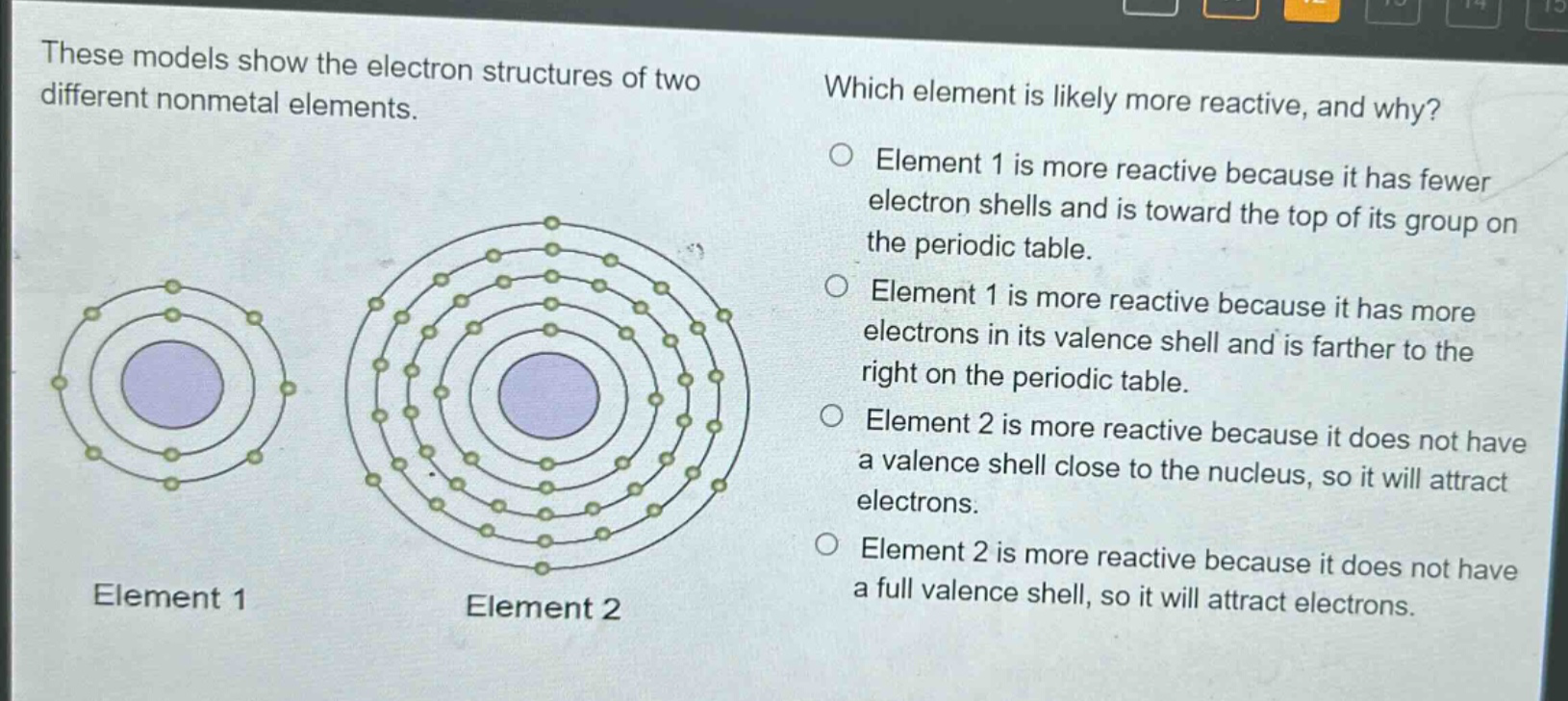
these models show the electron structures of two different nonmetal elements. which element is likely more reactive, and why? element 1 is more reactive because it has fewer electron shells and is toward the top of its group on the periodic table. element 1 is more reactive because it has more electrons in its valence shell and is farther to the right on the periodic table. element 2 is more reactive because it does not have a valence shell close to the nucleus, so it will attract electrons. element 2 is more reactive because it does not have a full valence shell, so it will attract electrons. element 1 element 2
Answer
Answer:
Element 1 is more reactive because it has fewer electron shells and is toward the top of its group on the periodic table.
Explanation:
Step1: Recall reactivity trends
Reactivity of non - metals increases up a group.
Step2: Analyze electron shells
Element 1 has fewer electron shells. Fewer shells mean valence electrons are closer to nucleus, more attracted, and more reactive.
Step3: Consider periodic table position
Being at the top of the group (due to fewer shells) makes Element 1 more reactive compared to Element 2 which has more shells and is lower in the group.