multiple select question select all that apply which anhydrides are identified correctly? a metal oxide is a…
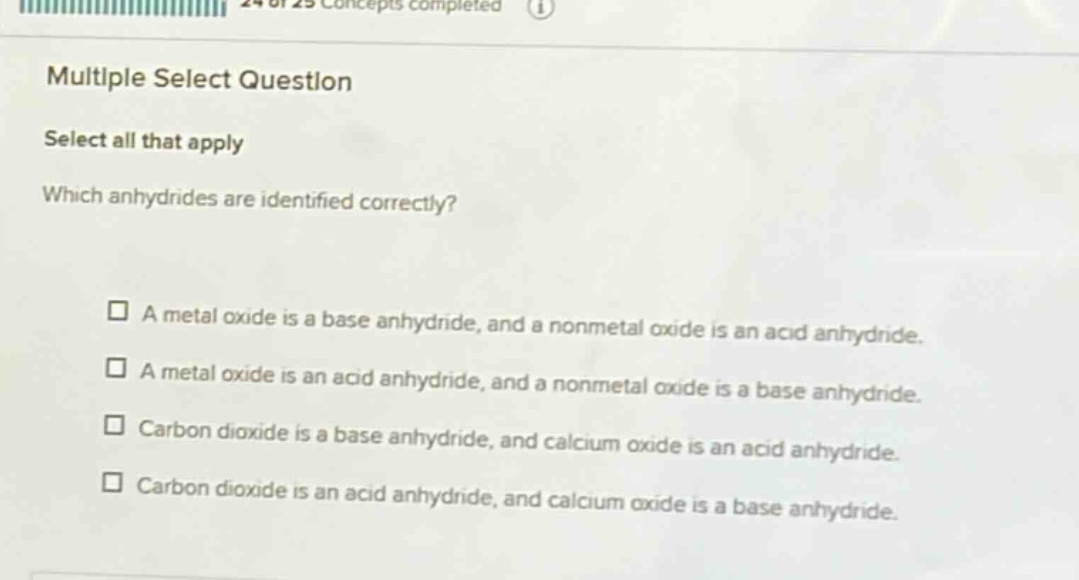
multiple select question select all that apply which anhydrides are identified correctly? a metal oxide is a base anhydride, and a nonmetal oxide is an acid anhydride. a metal oxide is an acid anhydride, and a nonmetal oxide is a base anhydride. carbon dioxide is a base anhydride, and calcium oxide is an acid anhydride. carbon dioxide is an acid anhydride, and calcium oxide is a base anhydride.
Answer
Brief Explanations:
Metal oxides react with water to form bases, so they are base - anhydrides. Non - metal oxides react with water to form acids, so they are acid - anhydrides. Carbon dioxide ($CO_2$) is a non - metal oxide and is an acid anhydride. Calcium oxide ($CaO$) is a metal oxide and is a base anhydride.
Answer:
A. A metal oxide is a base anhydride, and a nonmetal oxide is an acid anhydride. D. Carbon dioxide is an acid anhydride, and calcium oxide is a base anhydride.