which pairs of elements do not have to satisfy the octet rule for stability?\npotassium (k) and sodium…
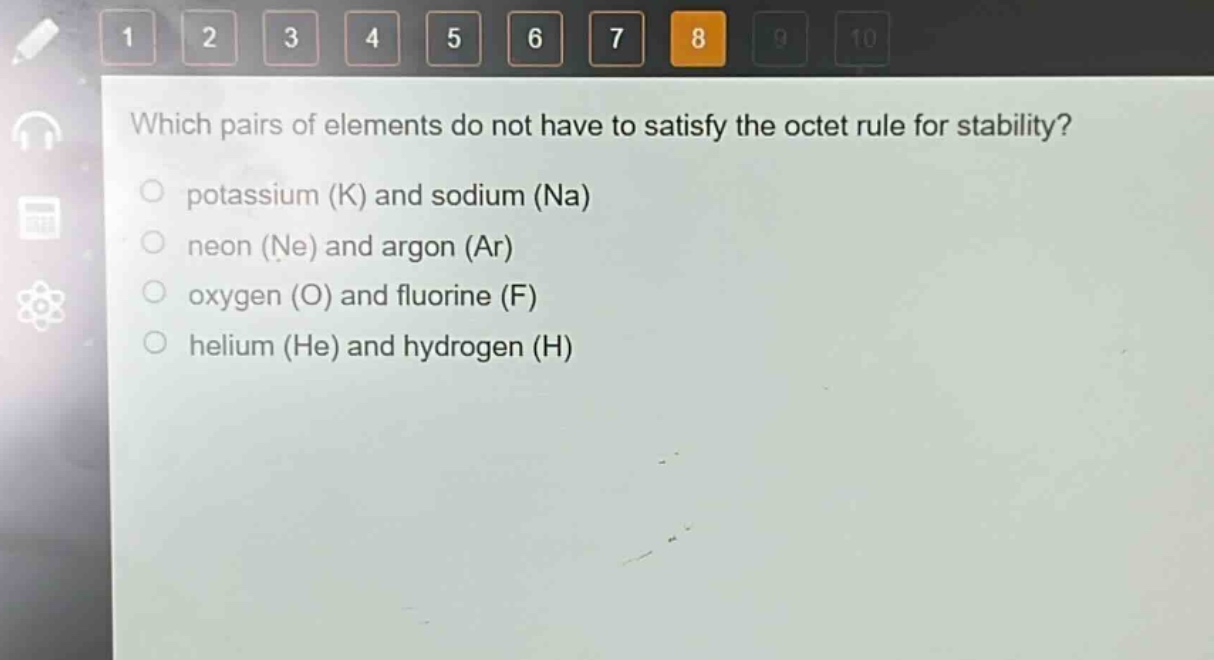
which pairs of elements do not have to satisfy the octet rule for stability?\npotassium (k) and sodium (na)\nneon (ne) and argon (ar)\noxygen (o) and fluorine (f)\nhelium (he) and hydrogen (h)
Answer
Brief Explanations:
The octet rule states that atoms tend to gain, lose, or share electrons to have eight electrons in their outer - shell for stability. Helium has a full outer - shell with 2 electrons (duet rule), and hydrogen is stable with 2 electrons in its outer - shell as well, so they don't follow the octet rule. Potassium and sodium follow the octet rule when forming ions. Neon and argon already have a full octet as noble gases. Oxygen and fluorine follow the octet rule when forming compounds.
Answer:
D. helium (He) and hydrogen (H)