a reaction occurs when solid x is placed into solution y. as a result, the temperature of the new solution…
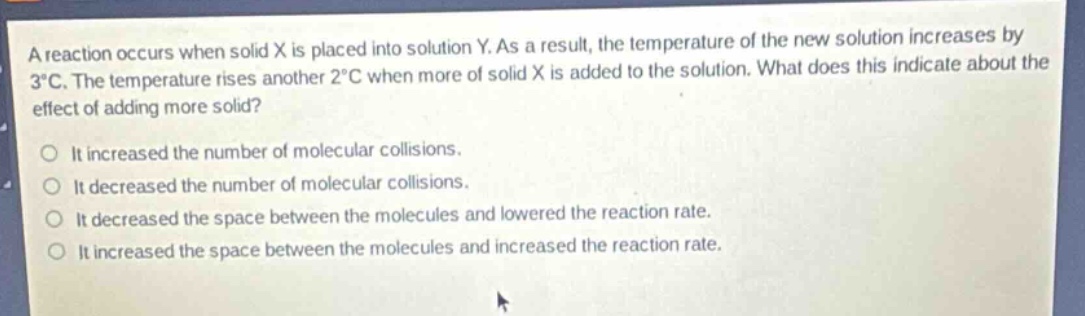
a reaction occurs when solid x is placed into solution y. as a result, the temperature of the new solution increases by 3°c. the temperature rises another 2°c when more of solid x is added to the solution. what does this indicate about the effect of adding more solid?\nit increased the number of molecular collisions.\nit decreased the number of molecular collisions.\nit decreased the space between the molecules and lowered the reaction rate.\nit increased the space between the molecules and increased the reaction rate.
Answer
Brief Explanation:
When more solid X is added and the temperature rises, it means the reaction rate increases. An increase in the amount of reactant (solid X) leads to more molecular collisions, which speeds up the reaction and releases more heat causing the temperature rise.
Answer:
It increased the number of molecular collisions.