which reactions performed in the experiment involved chemical changes?\ncrushing calcium carbonate\nmixing…
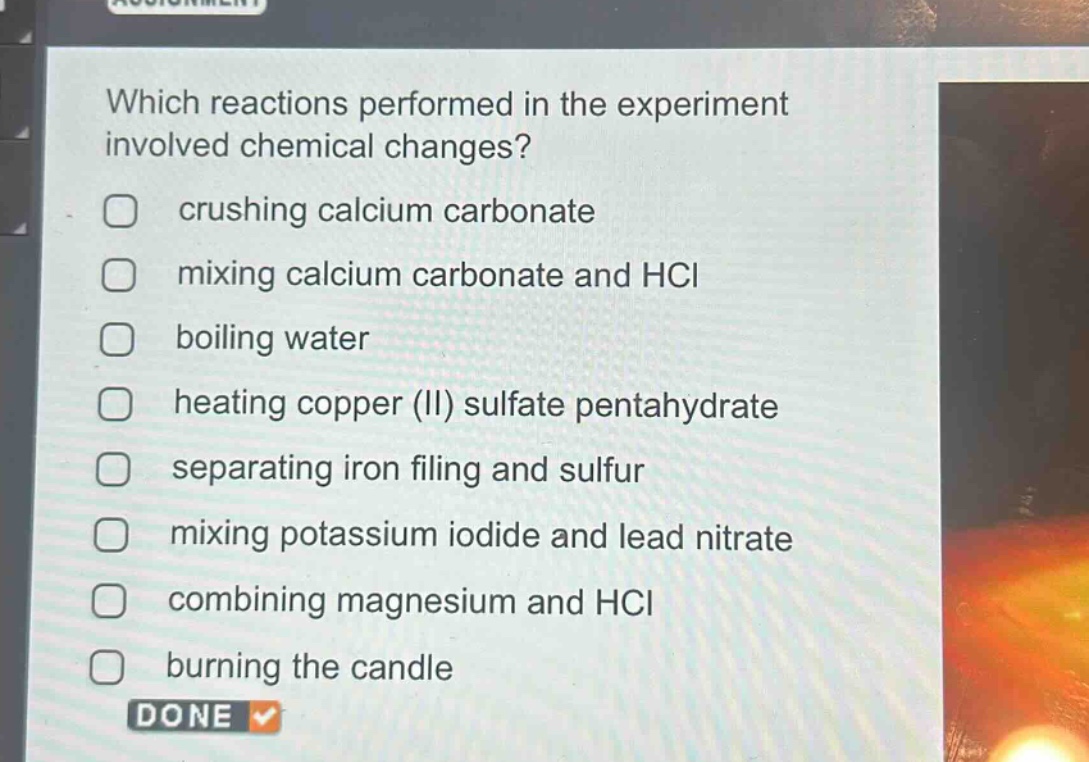
which reactions performed in the experiment involved chemical changes?\ncrushing calcium carbonate\nmixing calcium carbonate and hcl\nboiling water\nheating copper (ii) sulfate pentahydrate\nseparating iron filing and sulfur\nmixing potassium iodide and lead nitrate\ncombining magnesium and hcl\nburning the candle
Answer
Brief Explanations:
A chemical change results in the formation of new substances. Crushing calcium carbonate is a physical change as it only changes the size. Boiling water is a physical change (change of state). Separating iron filing and sulfur is a physical separation. Mixing calcium carbonate and HCl forms new substances like calcium chloride, water and carbon - dioxide. Heating copper (II) sulfate pentahydrate loses water of crystallization and forms new substances. Mixing potassium iodide and lead nitrate forms lead iodide precipitate. Combining magnesium and HCl forms hydrogen gas and magnesium chloride. Burning the candle involves combustion, forming new substances like carbon - dioxide and water.
Answer:
mixing calcium carbonate and HCl, heating copper (II) sulfate pentahydrate, mixing potassium iodide and lead nitrate, combining magnesium and HCl, burning the candle