which rule for assigning oxidation numbers is correct?\nhydrogen is usually -1.\noxygen is usually -2.\na…
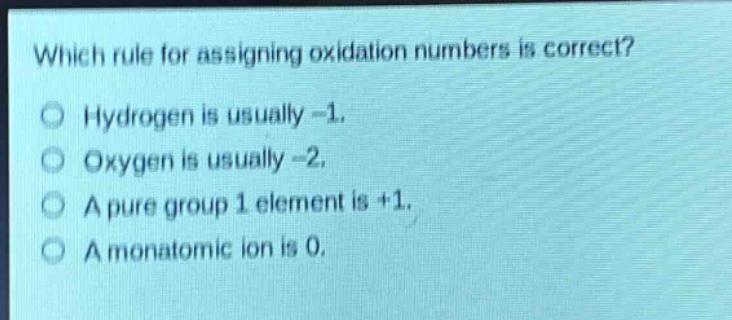
which rule for assigning oxidation numbers is correct?\nhydrogen is usually -1.\noxygen is usually -2.\na pure group 1 element is +1.\na monatomic ion is 0.
Answer
Brief Explanations:
- Hydrogen usually has an oxidation number of +1 when bonded to non - metals and -1 when bonded to metals. So the statement "Hydrogen is usually -1" is incorrect.
- Oxygen usually has an oxidation number of -2 in most compounds, except in peroxides (where it is -1) and in compounds with fluorine. This is a common and correct rule.
- A pure group 1 element has an oxidation number of 0, not +1. In compounds, group 1 elements have an oxidation number of +1.
- A monatomic ion has an oxidation number equal to its charge, not 0.
Answer:
Oxygen is usually -2.