in a science demonstration, a teacher mixed zinc (zn) with hydrogen chloride (hcl) in a flask and quickly…
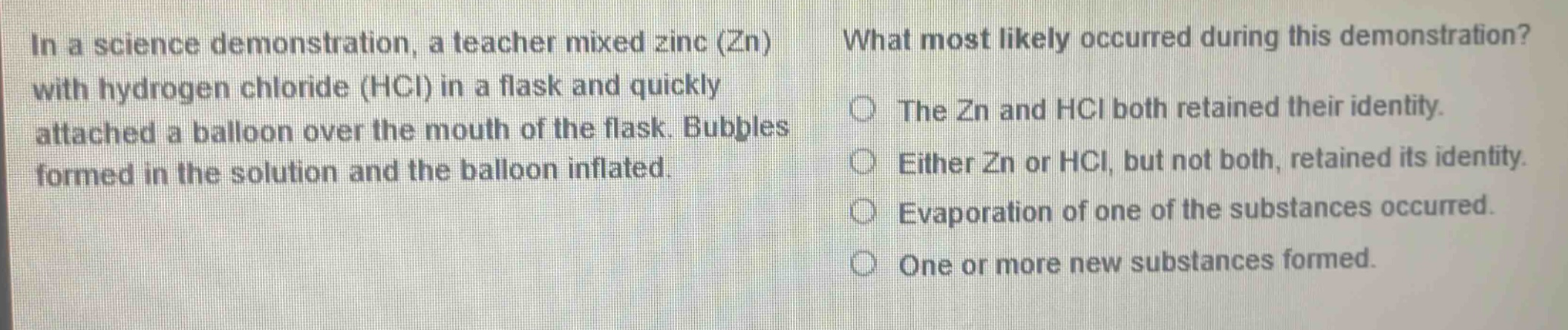
in a science demonstration, a teacher mixed zinc (zn) with hydrogen chloride (hcl) in a flask and quickly attached a balloon over the mouth of the flask. bubbles formed in the solution and the balloon inflated. what most likely occurred during this demonstration? the zn and hcl both retained their identity. either zn or hcl, but not both, retained its identity. evaporation of one of the substances occurred. one or more new substances formed.
Answer
Brief Explanations:
When zinc (Zn) reacts with hydrogen chloride (HCl), a chemical reaction occurs. The bubbles and inflation of the balloon indicate the production of a gas (hydrogen gas in this case). A chemical reaction results in the formation of one or more new substances. The reactants (Zn and HCl) change their chemical identity. Evaporation is a physical change and not what is happening here.
Answer:
One or more new substances formed.