select the statement(s) that are part of atomic theory. neutral atoms typically have an equal number of…
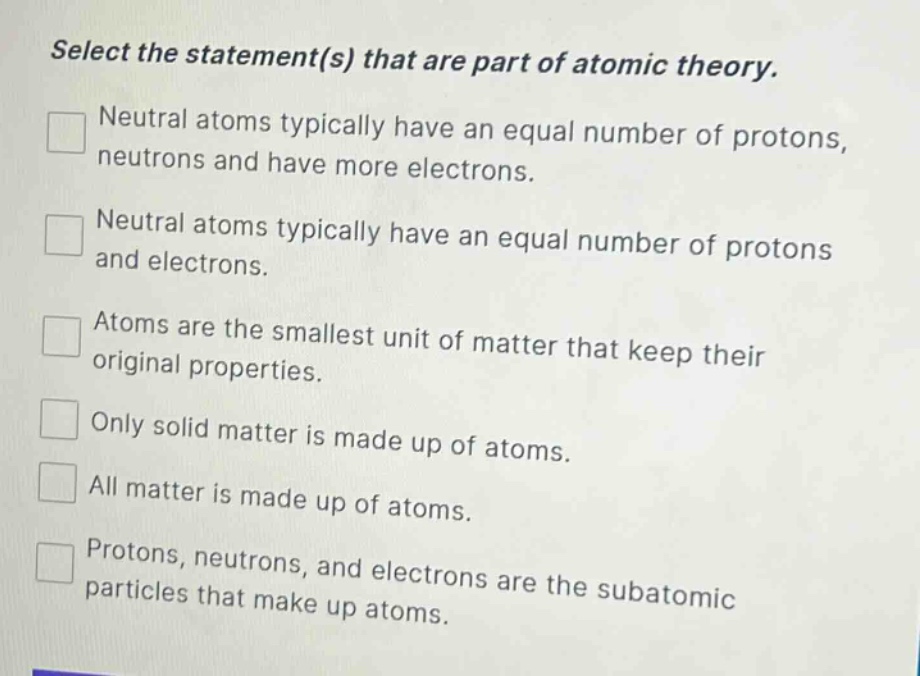
select the statement(s) that are part of atomic theory. neutral atoms typically have an equal number of protons, neutrons and have more electrons. neutral atoms typically have an equal number of protons and electrons. atoms are the smallest unit of matter that keep their original properties. only solid matter is made up of atoms. all matter is made up of atoms. protons, neutrons, and electrons are the subatomic particles that make up atoms.
Answer
Brief Explanations:
- In a neutral atom, the number of protons (positively - charged) equals the number of electrons (negatively - charged), so the second statement is correct.
- Atoms are the smallest unit of matter that retain the chemical properties of an element, making the third statement correct.
- All matter, whether solid, liquid, gas, or plasma, is made up of atoms, so the fourth statement is incorrect and the fifth is correct.
- Protons, neutrons, and electrons are the subatomic particles that constitute atoms, making the sixth statement correct. The first statement is incorrect as in a neutral atom, the number of protons equals the number of electrons, and the number of neutrons is not necessarily equal to the number of protons or electrons.
Answer:
- Neutral atoms typically have an equal number of protons and electrons.
- Atoms are the smallest unit of matter that keep their original properties.
- All matter is made up of atoms.
- Protons, neutrons, and electrons are the subatomic particles that make up atoms.