which statement best describes the amount of catalyst that remains at the end of a reaction?\nmore catalyst…
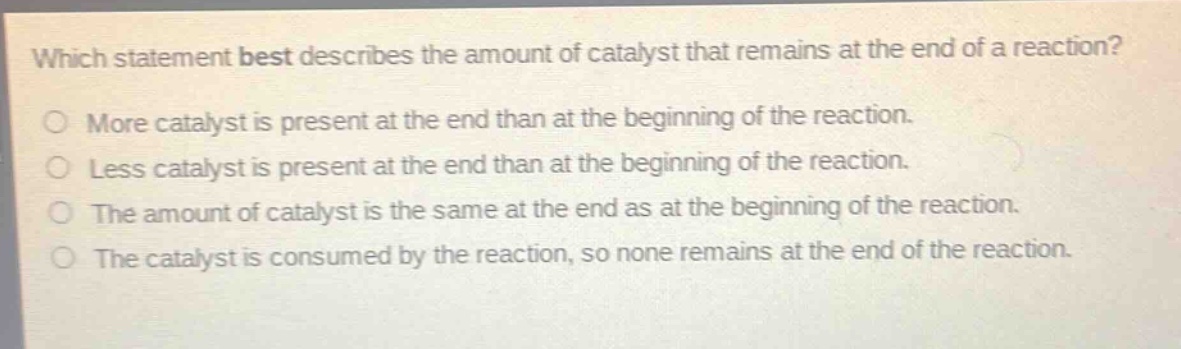
which statement best describes the amount of catalyst that remains at the end of a reaction?\nmore catalyst is present at the end than at the beginning of the reaction.\nless catalyst is present at the end than at the beginning of the reaction.\nthe amount of catalyst is the same at the end as at the beginning of the reaction.\nthe catalyst is consumed by the reaction, so none remains at the end of the reaction.
Answer
Brief Explanations:
A catalyst is a substance that speeds up a chemical reaction without being consumed in the reaction. So its amount remains unchanged from the start to the end of the reaction.
Answer:
The amount of catalyst is the same at the end as at the beginning of the reaction.