which statement best describes chemical properties of matter? chemical properties, such as density, must be…
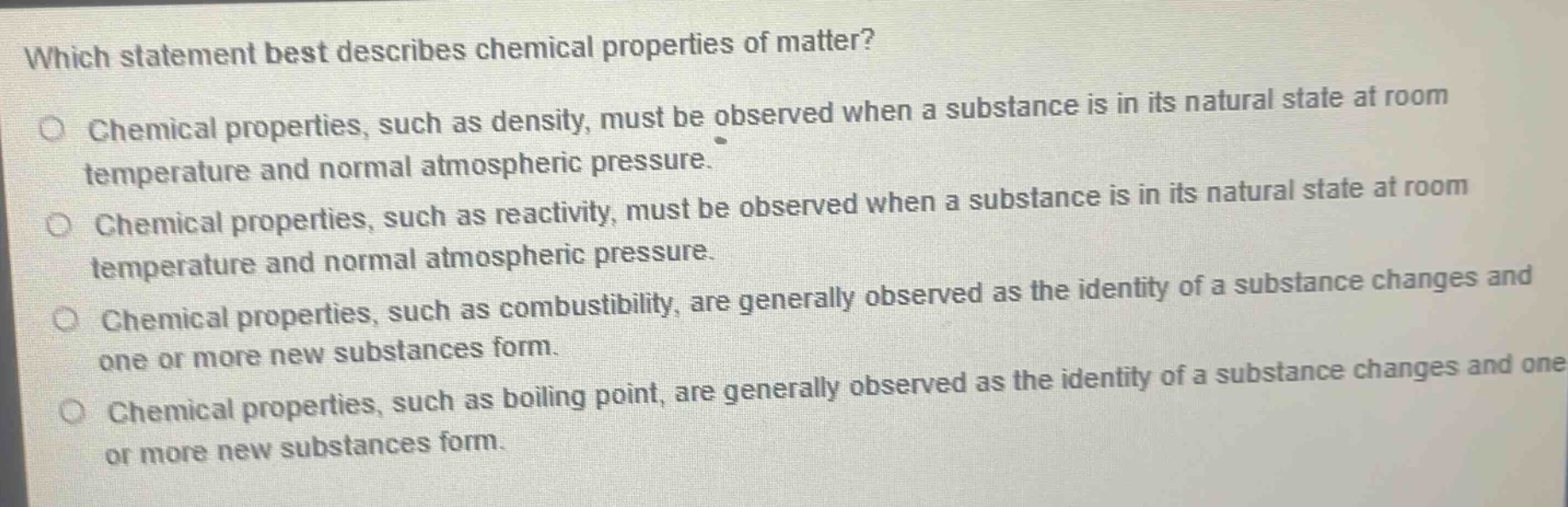
which statement best describes chemical properties of matter? chemical properties, such as density, must be observed when a substance is in its natural state at room temperature and normal atmospheric pressure. chemical properties, such as reactivity, must be observed when a substance is in its natural state at room temperature and normal atmospheric pressure. chemical properties, such as combustibility, are generally observed as the identity of a substance changes and one or more new substances form. chemical properties, such as boiling point, are generally observed as the identity of a substance changes and one or more new substances form.
Answer
Brief Explanations:
Chemical properties describe how a substance changes into a new substance. Combustibility is a chemical property as it involves a substance reacting with oxygen to form new substances. Density and boiling - point are physical properties. Reactivity is a chemical property but the description about observing it in natural state at room - temperature and normal pressure is incorrect. Chemical properties are observed during chemical reactions where the identity of the substance changes and new substances form.
Answer:
C. Chemical properties, such as combustibility, are generally observed as the identity of a substance changes and one or more new substances form.