these statements describe three different reactions.\n1 - an atom shares electrons with another atom.\n2…
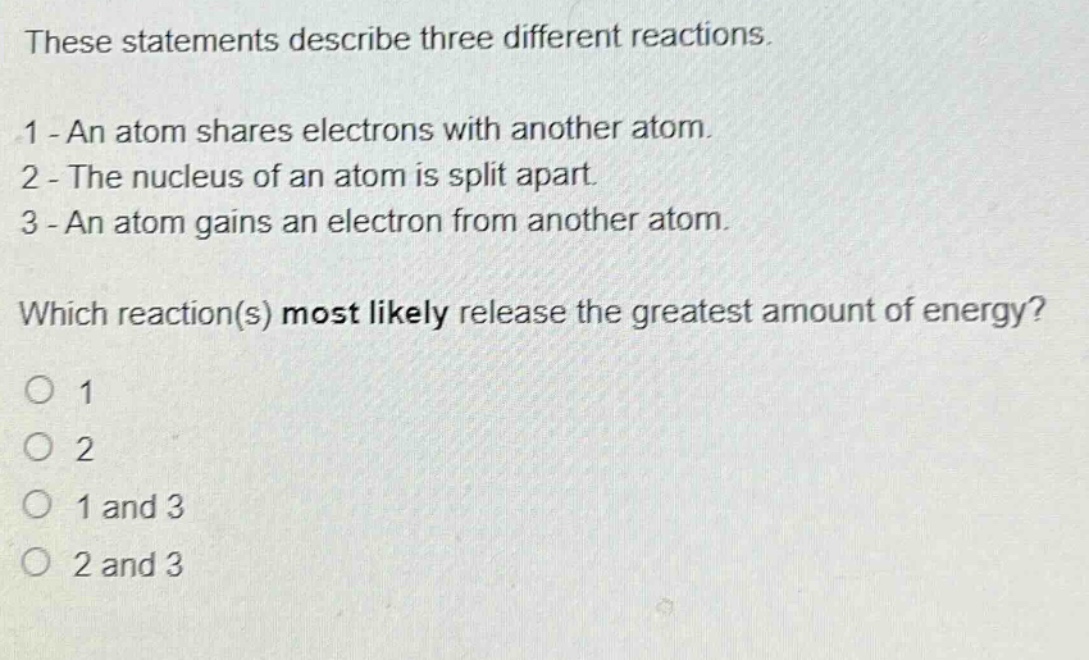
these statements describe three different reactions.\n1 - an atom shares electrons with another atom.\n2 - the nucleus of an atom is split apart.\n3 - an atom gains an electron from another atom.\nwhich reaction(s) most likely release the greatest amount of energy?\no 1\no 2\no 1 and 3\no 2 and 3
Answer
Explanation:
Step1: Identify the reaction types
1 is a covalent - bonding reaction (sharing electrons), 3 is an ionic - bonding reaction (electron transfer). These are chemical reactions. 2 is a nuclear fission reaction (splitting the nucleus).
Step2: Compare energy release
Chemical reactions (1 and 3) involve changes in the electron - cloud of atoms. Nuclear reactions (2) involve changes in the nucleus. Nuclear reactions release much more energy than chemical reactions because the forces holding the nucleus together are much stronger than the forces between electrons and atoms in chemical bonds.
Answer:
2