students are using clay balls to model how atoms are recombined in chemical reactions. first, they model the…
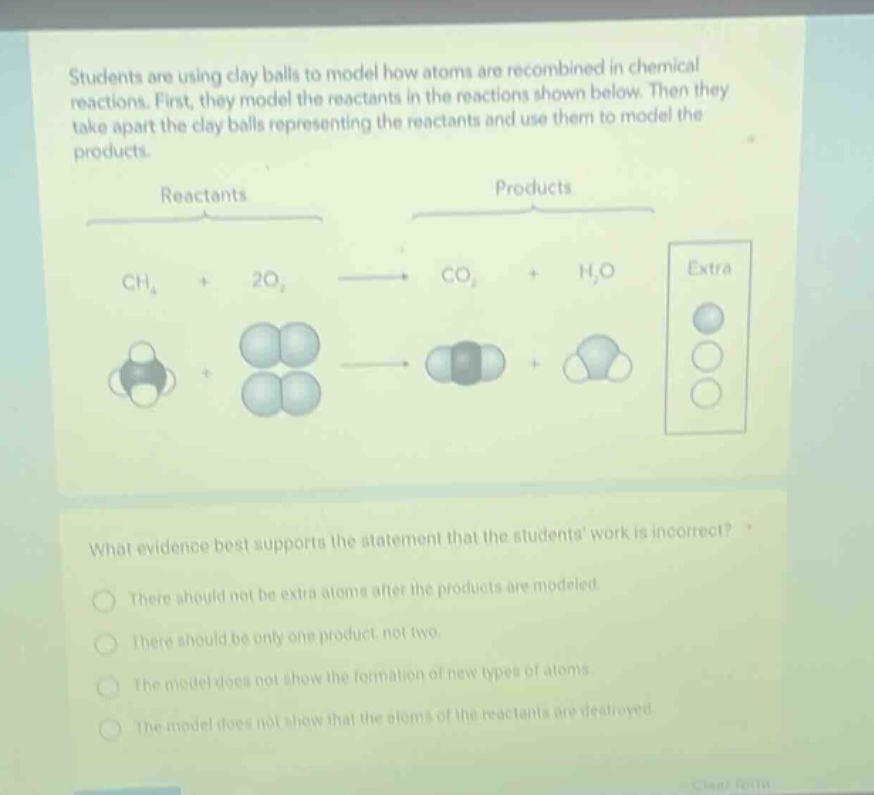
students are using clay balls to model how atoms are recombined in chemical reactions. first, they model the reactants in the reactions shown below. then they take apart the clay balls representing the reactants and use them to model the products. reactants products ch₄ + 2o₂ → co₂ + h₂o extra what evidence best supports the statement that the students work is incorrect? there should not be extra atoms after the products are modeled. there should be only one product, not two. the model does not show the formation of new types of atoms. the model does not show that the atoms of the reactants are destroyed.
Answer
Brief Explanations:
In a chemical reaction, atoms are conserved. They are rearranged to form products, but no atoms should be left over. The presence of extra atoms in the model indicates an error.
Answer:
There should not be extra atoms after the products are modeled.